Numerical (Water)

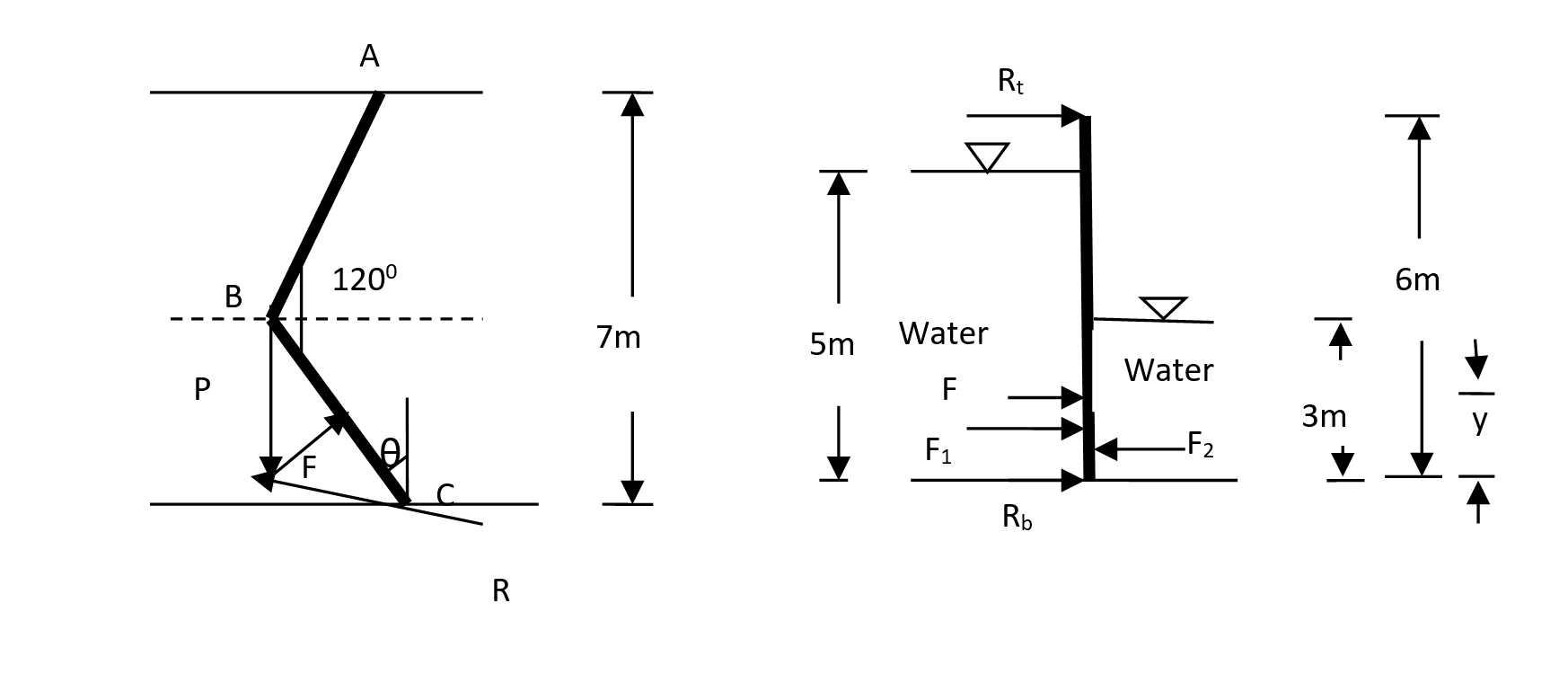
Each gate of a lock is 6m high and is supported by two hinges placed on the top and the bottom. When the gates are closed, they make an angle of 1200. The width of the lock is 7m. If the water levels are 5m and 2m at upstream and downstream respectively, determine the magnitude of forces on the hinge due to the water pressure.

Each gate of a lock is 6m high and is supported by two hinges placed on the top and the bottom. When the gates are closed, they make an angle of 1200. The width of the lock is 7m. If the water levels are 5m and 2m at upstream and downstream respectively, determine the magnitude of forces on the hinge due to the water pressure.

Forces on Hinges of Lock Gates Problem Statement Each gate of a lock is 6m high and is supported by […]
Each gate of a lock is 6m high and is supported by two hinges placed on the top and the bottom. When the gates are closed, they make an angle of 1200. The width of the lock is 7m. If the water levels are 5m and 2m at upstream and downstream respectively, determine the magnitude of forces on the hinge due to the water pressure. Read More »

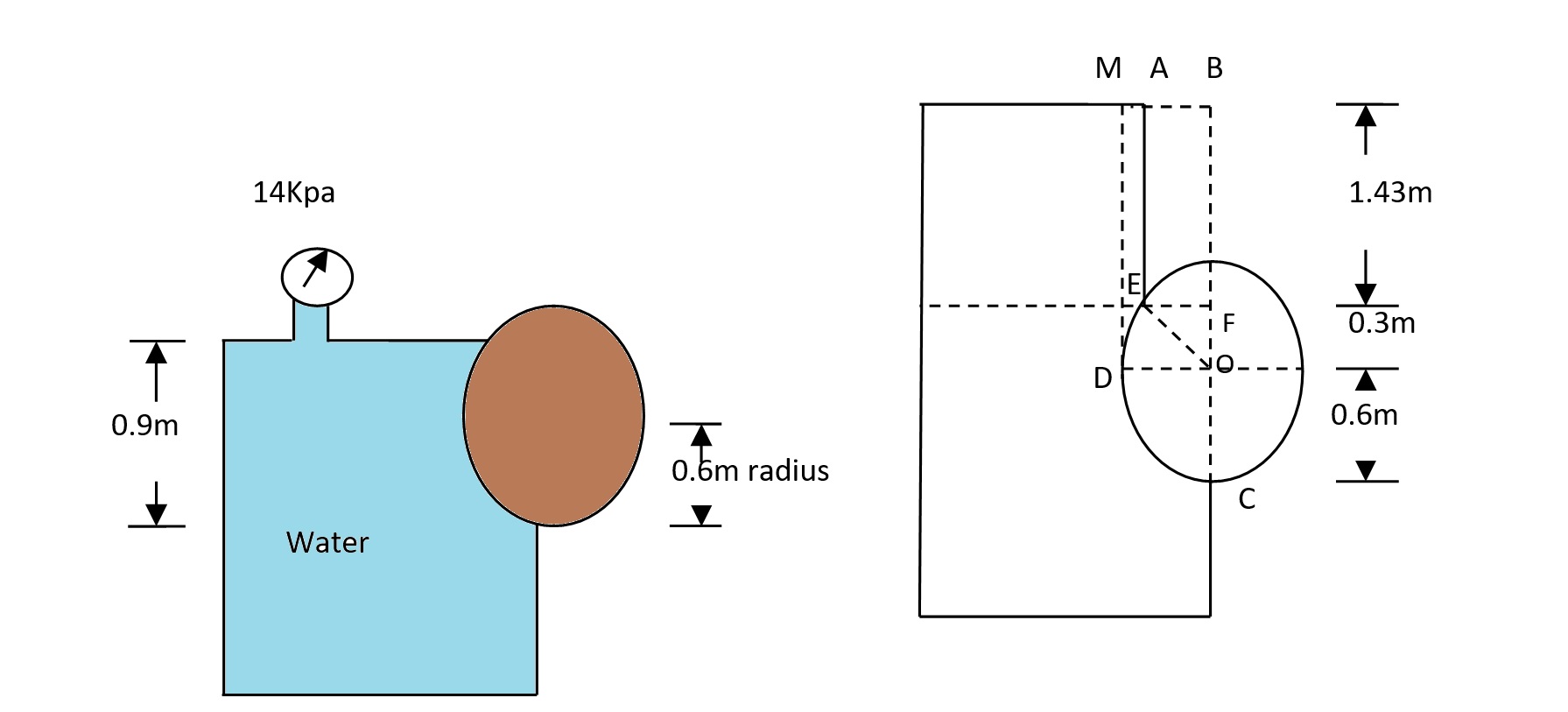
The tank whose cross section is shown in fig. is 1.2m long and full of water under pressure. Find the components of the force required to keep the cylinder in position, neglecting the weight of the cylinder.

The tank whose cross section is shown in fig. is 1.2m long and full of water under pressure. Find the components of the force required to keep the cylinder in position, neglecting the weight of the cylinder.

Forces on Cylinder in Tank Problem Statement The tank whose cross-section is shown in the figure is 1.2m long and

The tank whose cross section is shown in fig. is 1.2m long and full of water under pressure. Find the components of the force required to keep the cylinder in position, neglecting the weight of the cylinder. Read More »

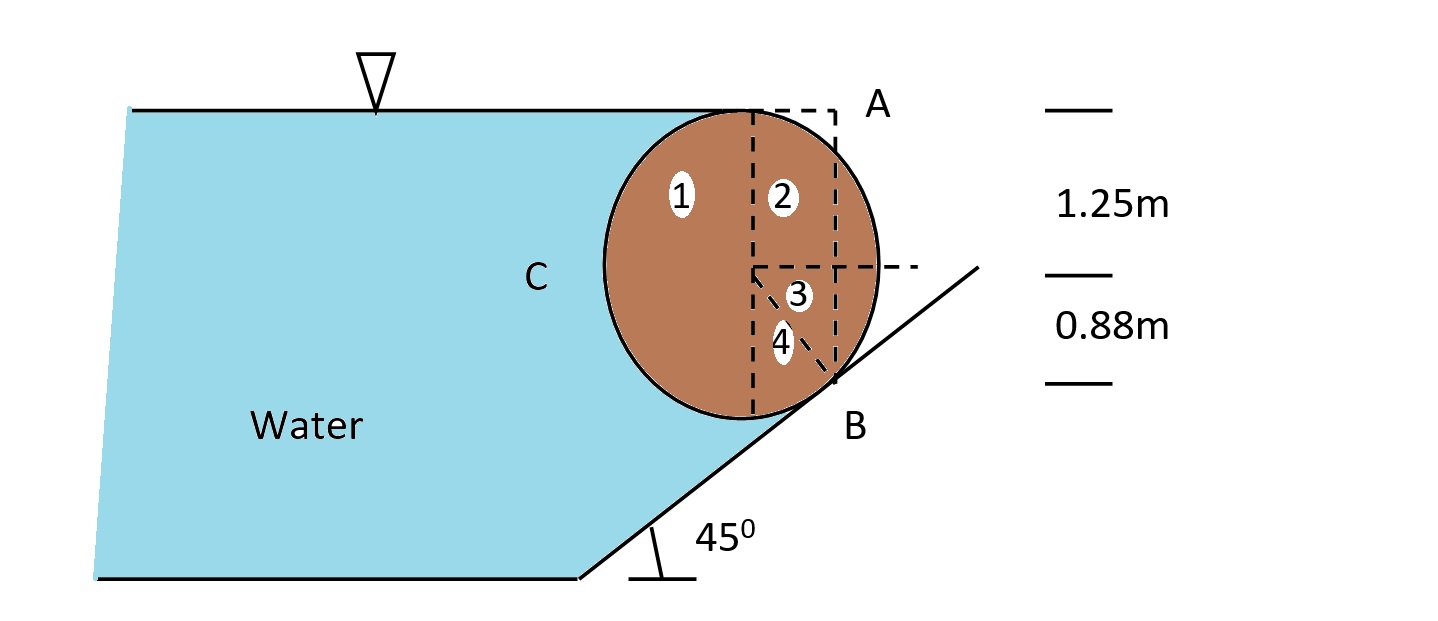
The 0.9m diameter cylinder in the fig. is 7m long and rests in static equilibrium against a frictionless wall at point B. Compute the specific gravity of the cylinder.

The 0.9m diameter cylinder in the fig. is 7m long and rests in static equilibrium against a frictionless wall at point B. Compute the specific gravity of the cylinder.

Specific Gravity of Cylinder Problem Statement The 0.9m diameter cylinder in the figure is 7m long and rests in static

The 0.9m diameter cylinder in the fig. is 7m long and rests in static equilibrium against a frictionless wall at point B. Compute the specific gravity of the cylinder. Read More »

The bottled liquid (sp gr = 0.9) in the fig. is under pressure, as shown by the manometer reading. Compute the net force on the 50mm radius concavity in the bottom of the bottle.

The bottled liquid (sp gr = 0.9) in the fig. is under pressure, as shown by the manometer reading. Compute the net force on the 50mm radius concavity in the bottom of the bottle.

Net Force on Concavity Problem Statement The bottled liquid (specific gravity = 0.9) in the figure is under pressure, as

The bottled liquid (sp gr = 0.9) in the fig. is under pressure, as shown by the manometer reading. Compute the net force on the 50mm radius concavity in the bottom of the bottle. Read More »

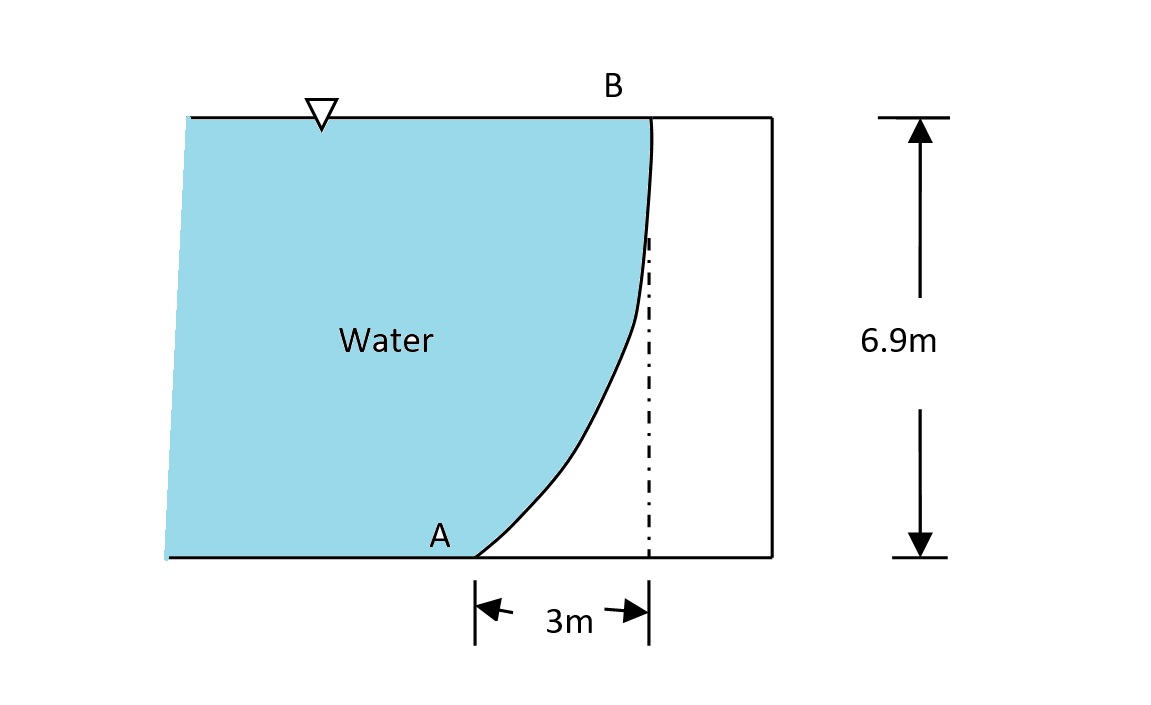
A dam has a parabolic profile as shown in the fig. Compute the horizontal and vertical components of the force on the dam due to the water. The width of dam is 15m.

A dam has a parabolic profile as shown in the fig. Compute the horizontal and vertical components of the force on the dam due to the water. The width of dam is 15m.

Dam Force Problem Problem Statement A dam has a parabolic profile as shown in the figure. Compute the horizontal and

A dam has a parabolic profile as shown in the fig. Compute the horizontal and vertical components of the force on the dam due to the water. The width of dam is 15m. Read More »

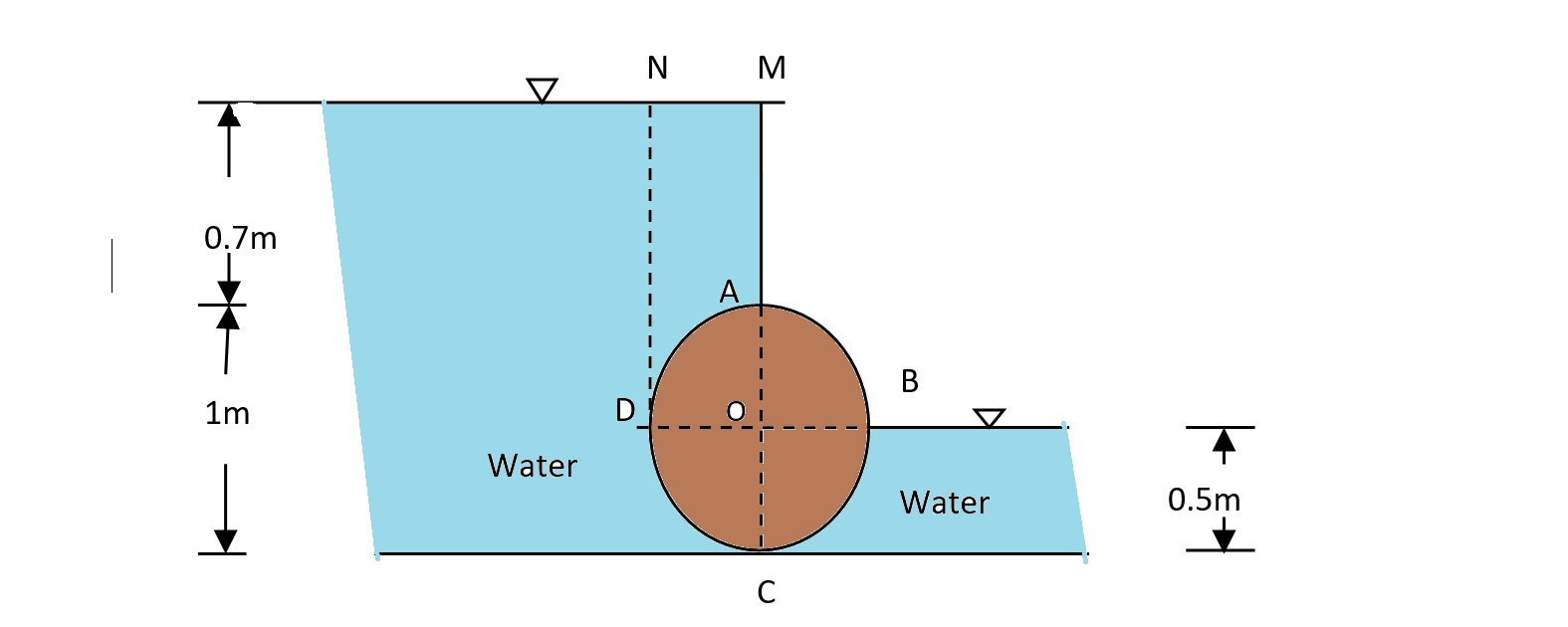
. In the fig., a 2.4m diameter cylinder plugs a rectangular hole in a tank that is 1.4m long. With what force is the cylinder pressed against the bottom of the tank due to the 2.7m depth of water?

In the fig., a 2.4m diameter cylinder plugs a rectangular hole in a tank that is 1.4m long. With what force is the cylinder pressed against the bottom of the tank due to the 2.7m depth of water?

Gate Force Problems Problem Statement In the figure, a 2.4 m diameter cylinder plugs a rectangular hole in a tank

In the fig., a 2.4m diameter cylinder plugs a rectangular hole in a tank that is 1.4m long. With what force is the cylinder pressed against the bottom of the tank due to the 2.7m depth of water? Read More »

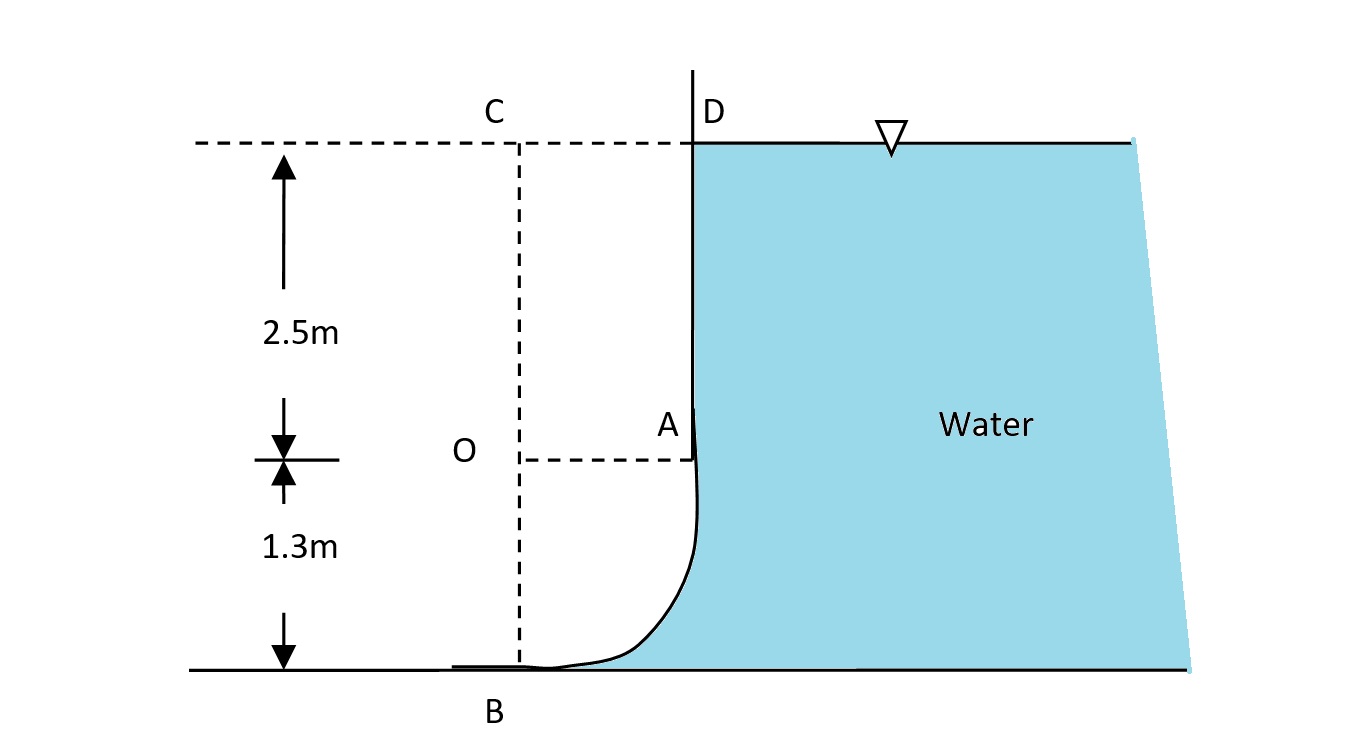
The water is on the right side of the curved surface AB, which is one quarter of a circle of radius 1.3m. The tank’s length is 2.1m. Find the horizontal and vertical component of the hydrostatic acting on the curved surface.

The water is on the right side of the curved surface AB, which is one quarter of a circle of radius 1.3m. The tank’s length is 2.1m. Find the horizontal and vertical component of the hydrostatic acting on the curved surface.

Gate Force Problems Problem Statement The water is on the right side of the curved surface AB, which is one

The water is on the right side of the curved surface AB, which is one quarter of a circle of radius 1.3m. The tank’s length is 2.1m. Find the horizontal and vertical component of the hydrostatic acting on the curved surface. Read More »

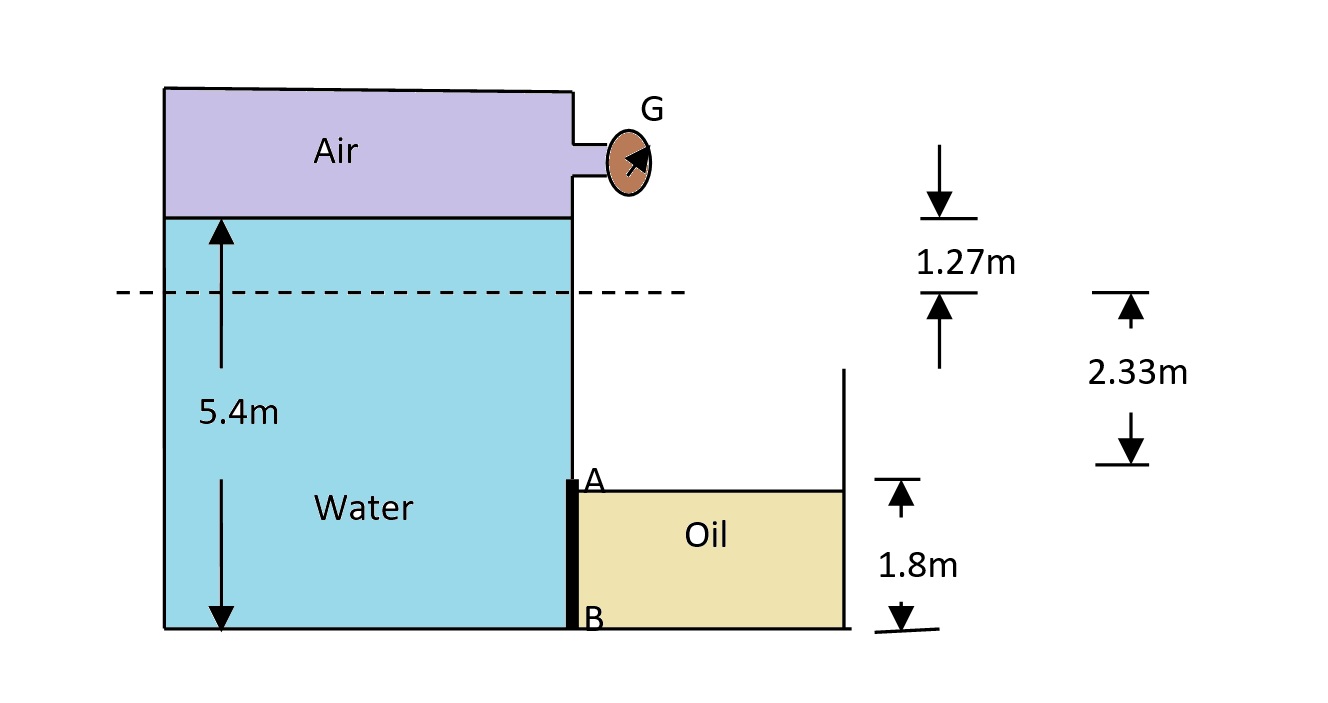
Gate AB in the fig. is 1.25m wide and hinged at A. Gage G reads -12.5KN/m2, while oil (sp gr = 0.75) is in the right tank. What horizontal force must be applied at B for equilibrium of gate AB?

Gate AB in the fig. is 1.25m wide and hinged at A. Gage G reads -12.5KN/m2, while oil (sp gr = 0.75) is in the right tank. What horizontal force must be applied at B for equilibrium of gate AB?

Gate Force Problems Problem Statement Gate AB in the figure is 1.25 m wide and hinged at A. Gauge G

Gate AB in the fig. is 1.25m wide and hinged at A. Gage G reads -12.5KN/m2, while oil (sp gr = 0.75) is in the right tank. What horizontal force must be applied at B for equilibrium of gate AB? Read More »

Scroll to Top