Numerical (Water)

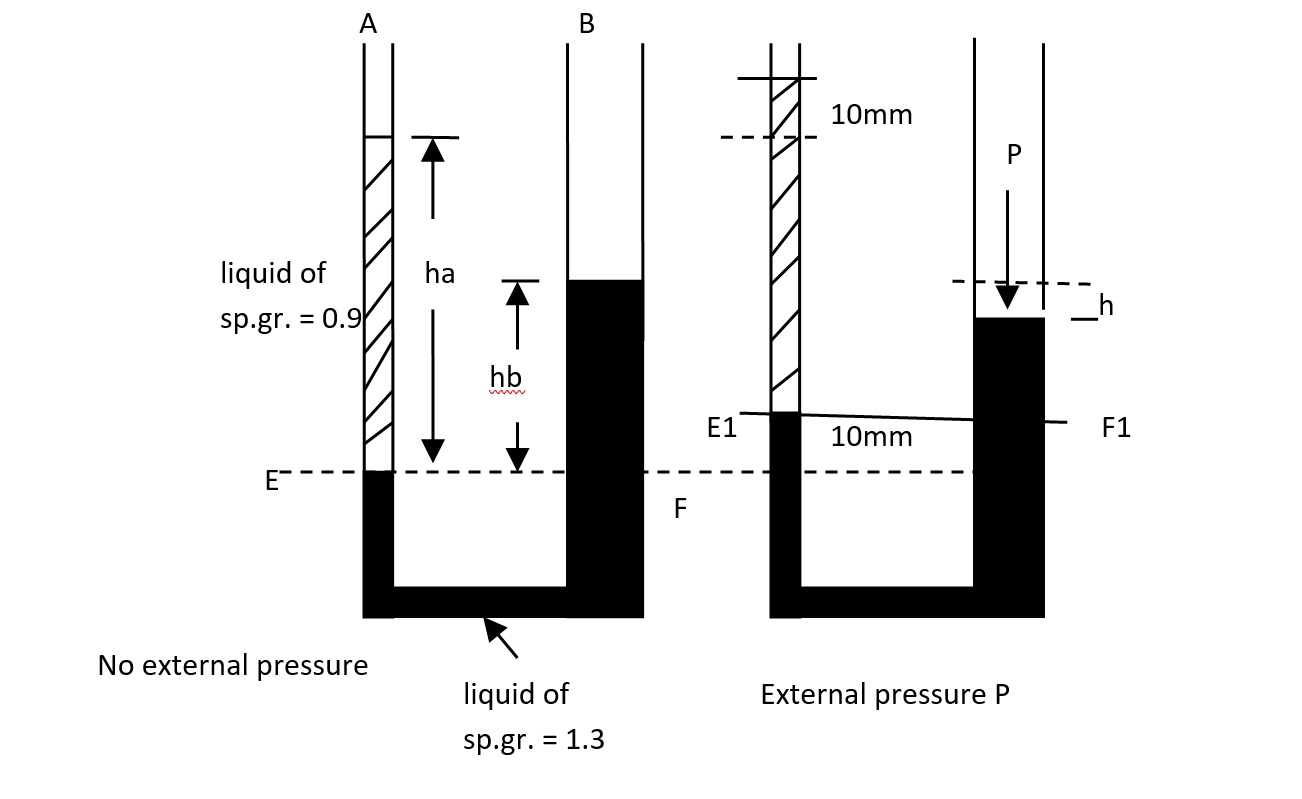
The diameters of the limbs A and B of a U-tube shown in fig. are 5mm and 20mm respectively. The limb A contains a liquid of sp. gr. 0.9 while the limb B contains a liquid of sp.gr. 1.3. The fig. shows the position of the liquids in the two limbs. Find what pressure should be applied on the surface of the heavier liquid in limb B so that the rise in level in the limb A is 10mm.

The diameters of the limbs A and B of a U-tube shown in fig. are 5mm and 20mm respectively. The limb A contains a liquid of sp. gr. 0.9 while the limb B contains a liquid of sp.gr. 1.3. The fig. shows the position of the liquids in the two limbs. Find what pressure should be applied on the surface of the heavier liquid in limb B so that the rise in level in the limb A is 10mm.

Problem Statement The diameters of the limbs A and B of a U-tube are 5 mm and 20 mm, respectively. […]
The diameters of the limbs A and B of a U-tube shown in fig. are 5mm and 20mm respectively. The limb A contains a liquid of sp. gr. 0.9 while the limb B contains a liquid of sp.gr. 1.3. The fig. shows the position of the liquids in the two limbs. Find what pressure should be applied on the surface of the heavier liquid in limb B so that the rise in level in the limb A is 10mm. Read More »

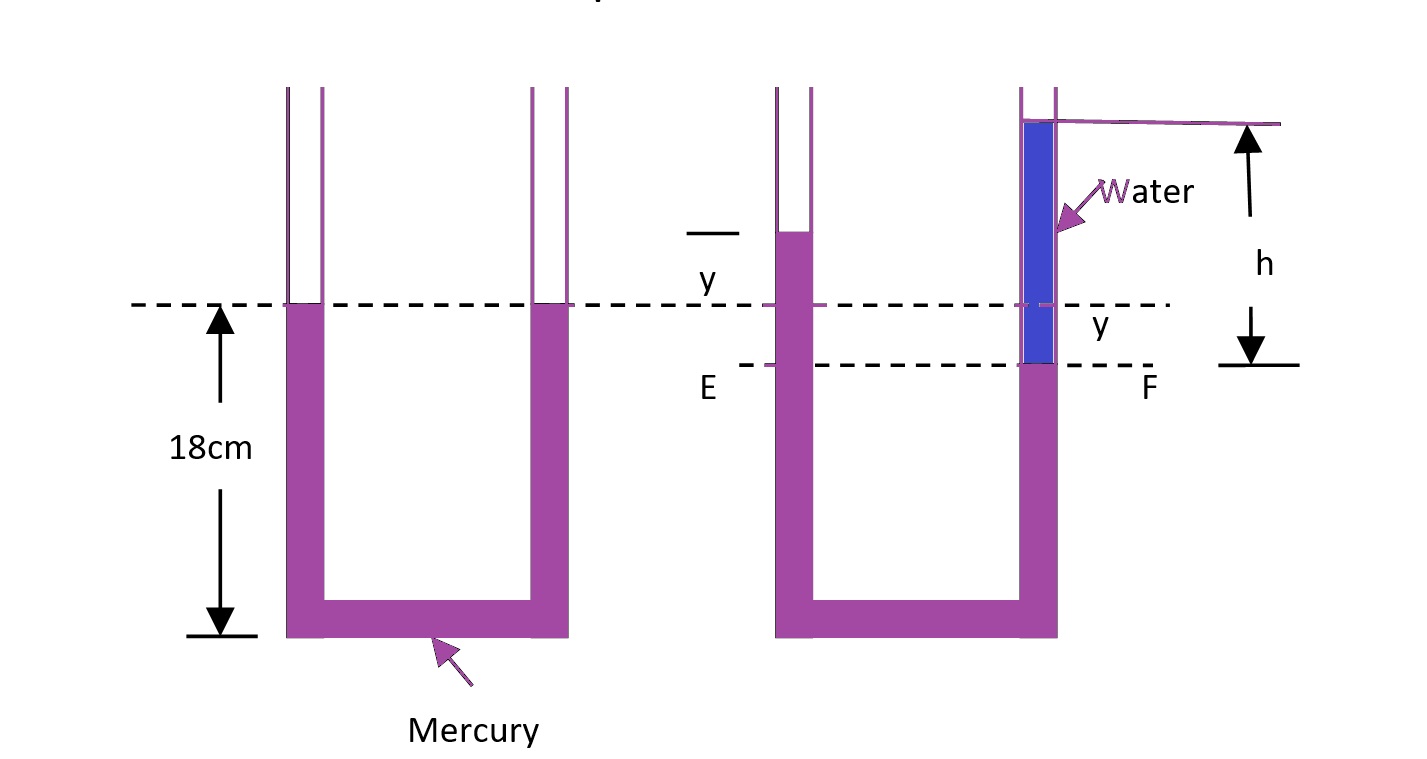
The fig. shows a 1cm diameter U-tube containing mercury. If now 20cc of water is poured into the right leg, find the levels of the free liquid surfaces in the two tubes.

The figure shows a 1 cm diameter U-tube containing mercury. If 20 cc of water is poured into the right leg, determine the levels of the free liquid surfaces in the two tubes.

Problem Statement The figure shows a 1 cm diameter U-tube containing mercury. If 20 cc of water is poured into

The figure shows a 1 cm diameter U-tube containing mercury. If 20 cc of water is poured into the right leg, determine the levels of the free liquid surfaces in the two tubes. Read More »

Figure shows a conical vessel having its outlet at A to which a U-tube manometer is connected. The reading of the manometer indicated in the figure pertains to the situation when the vessel is empty, i.e. the water surface is at A. Find the reading of the manometer when the vessel is completely filled with water.

Figure shows a conical vessel having its outlet at A to which a U-tube manometer is connected. The reading of the manometer indicated in the figure pertains to the situation when the vessel is empty, i.e. the water surface is at A. Find the reading of the manometer when the vessel is completely filled with water.

Problem Statement A conical vessel with an outlet at point A is connected to a U-tube manometer. Initial manometer reading

Figure shows a conical vessel having its outlet at A to which a U-tube manometer is connected. The reading of the manometer indicated in the figure pertains to the situation when the vessel is empty, i.e. the water surface is at A. Find the reading of the manometer when the vessel is completely filled with water. Read More »

A manometer is attached to a tank containing three different fluids as shown in fig. What will be the difference in elevation of the mercury column in the manometer (i.e. y)?

A manometer is attached to a tank containing three different fluids as shown in fig. What will be the difference in elevation of the mercury column in the manometer (i.e. y)?

Problem Statement A manometer is attached to a tank containing three different fluids as shown in the figure. What will

A manometer is attached to a tank containing three different fluids as shown in fig. What will be the difference in elevation of the mercury column in the manometer (i.e. y)? Read More »

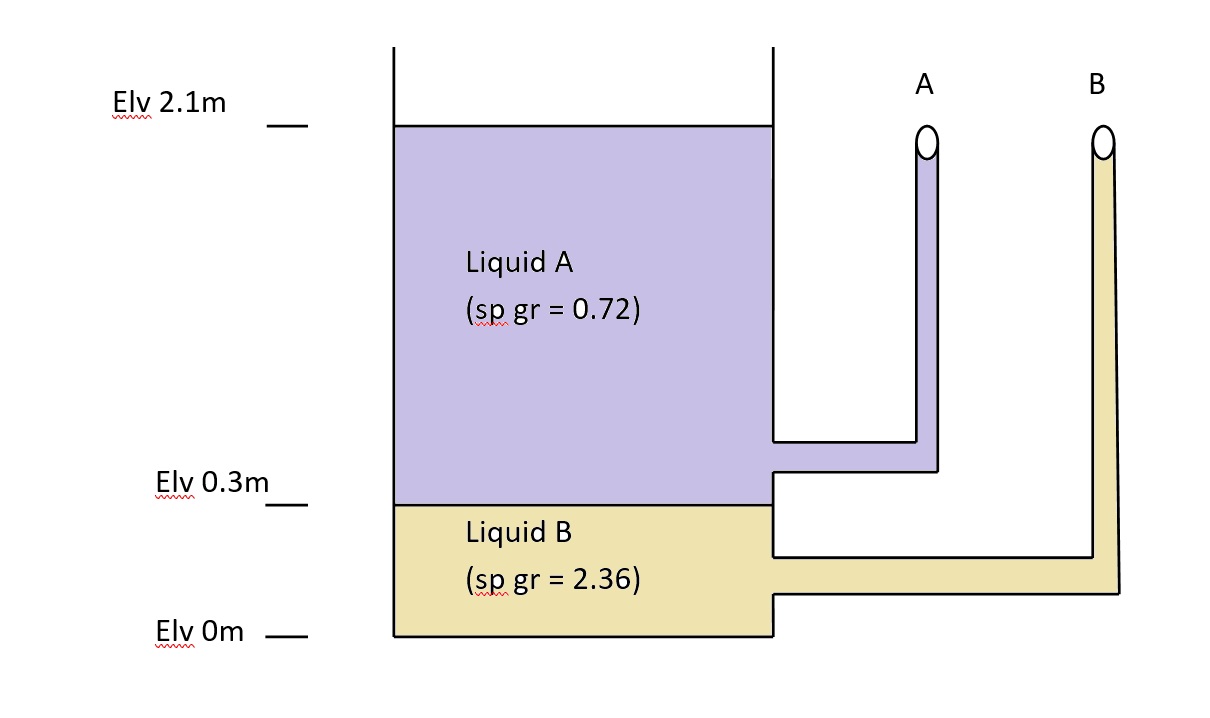
For the open tank, with piezometers attached on the side, containing two different immiscible liquids as shown in the fig., find (a) the elevation of liquid surface in piezometer A, (b) the elevation of liquid surface in piezometer B, and (c) the total pressure at the bottom of the tank.

For the open tank, with piezometers attached on the side, containing two different immiscible liquids as shown in the fig., find (a) the elevation of liquid surface in piezometer A, (b) the elevation of liquid surface in piezometer B, and (c) the total pressure at the bottom of the tank.

Problem Statement For the open tank, with piezometers attached on the side, containing two different immiscible liquids as shown in

For the open tank, with piezometers attached on the side, containing two different immiscible liquids as shown in the fig., find (a) the elevation of liquid surface in piezometer A, (b) the elevation of liquid surface in piezometer B, and (c) the total pressure at the bottom of the tank. Read More »

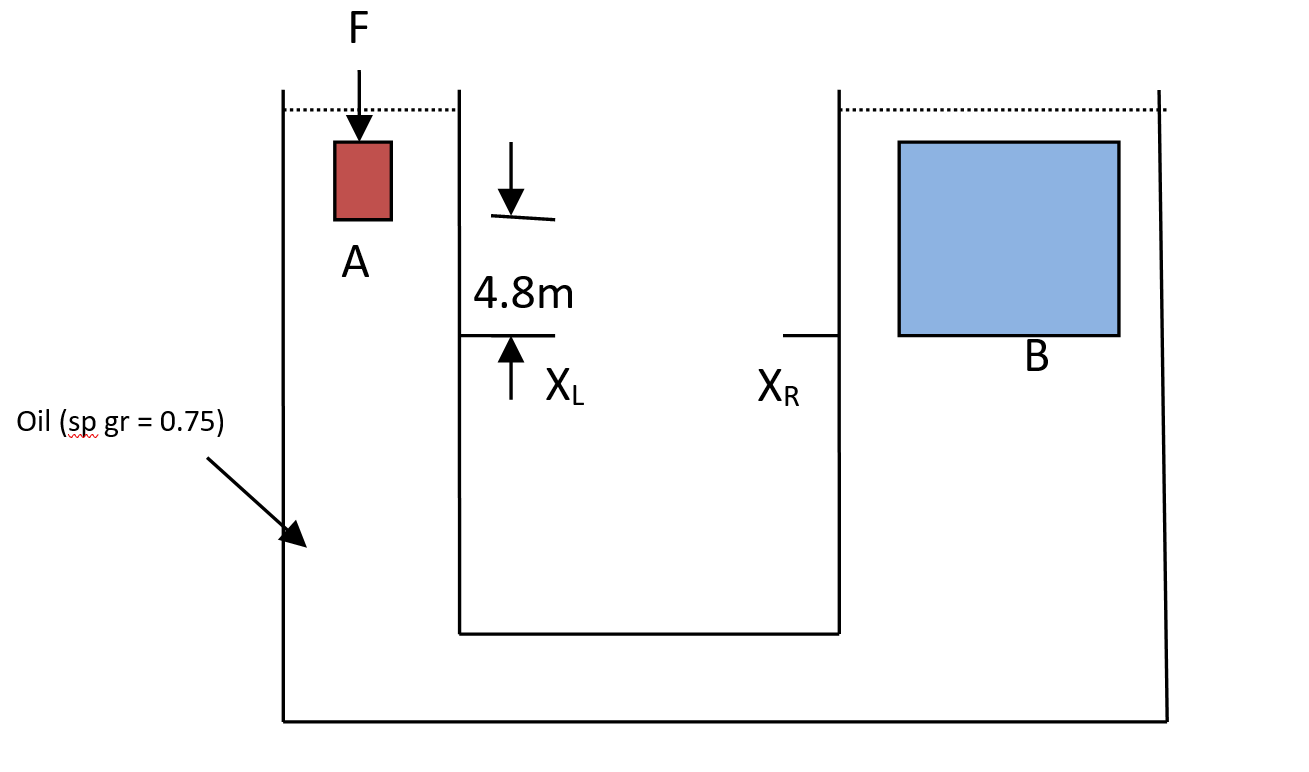
In the fig., the areas of the plunger A and cylinder B are 38.7 cm2 and 387 cm2, respectively, and the weight of B is 4500 N. The vessel and the connecting passages are filled with oil of specific gravity 0.75. What force F is required for equilibrium, neglecting the weight of A?

In the fig., the areas of the plunger A and cylinder B are 38.7 cm2 and 387 cm2, respectively, and the weight of B is 4500 N. The vessel and the connecting passages are filled with oil of specific gravity 0.75. What force F is required for equilibrium, neglecting the weight of A?

Problem Statement In the figure, the areas of the plunger A and cylinder B are \( 38.7 \, \text{cm}^2 \)

In the fig., the areas of the plunger A and cylinder B are 38.7 cm2 and 387 cm2, respectively, and the weight of B is 4500 N. The vessel and the connecting passages are filled with oil of specific gravity 0.75. What force F is required for equilibrium, neglecting the weight of A? Read More »

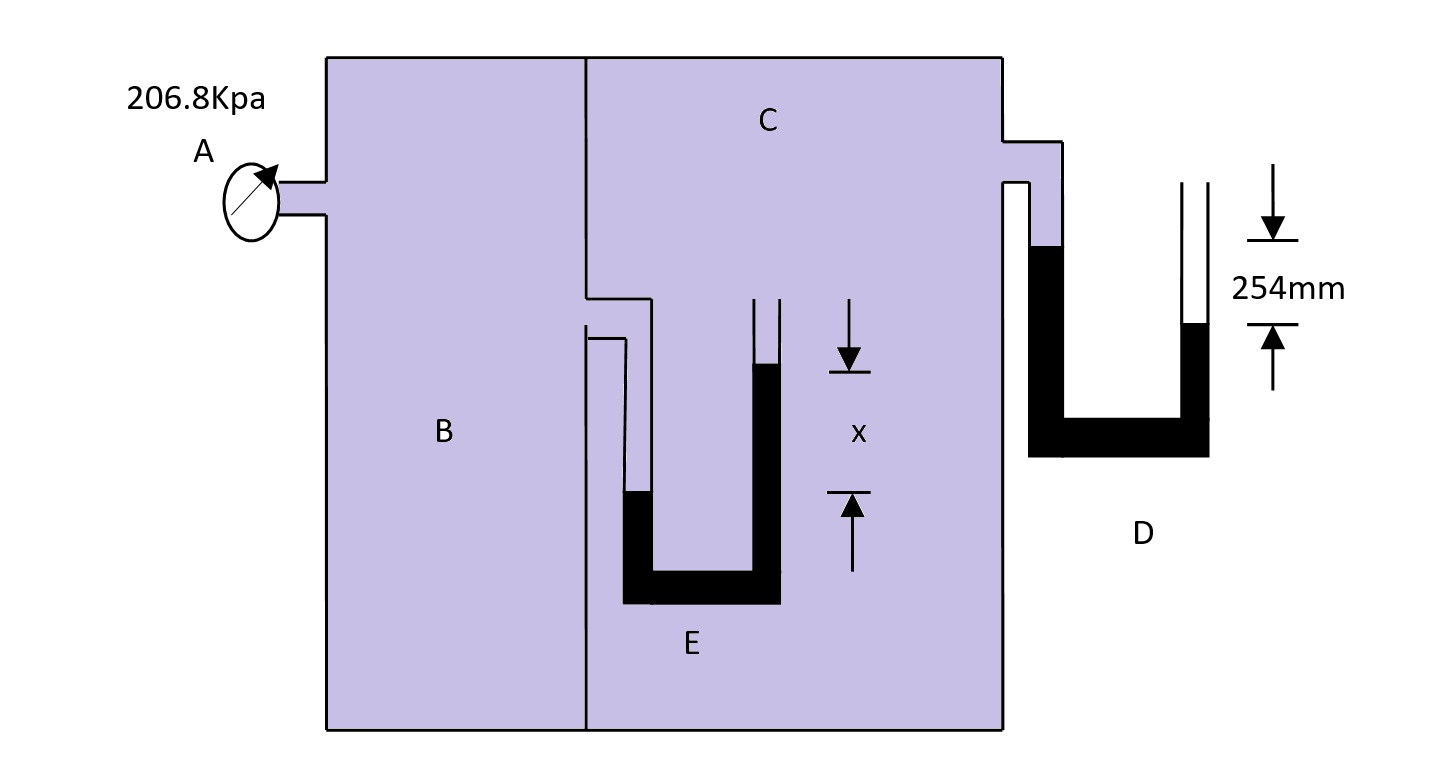
Compartments B and C in the fig. are closed and filled with air. The barometer reads 99.98 Kpa. When gages A and D read as indicated, what should be the value of x for gage E? (Hg in each tube)

Compartments B and C in the fig. are closed and filled with air. The barometer reads 99.98 Kpa. When gages A and D read as indicated, what should be the value of x for gage E? (Hg in each tube)

Problem Statement Compartments B and C in the figure are closed and filled with air. The barometer reads \( 99.98

Compartments B and C in the fig. are closed and filled with air. The barometer reads 99.98 Kpa. When gages A and D read as indicated, what should be the value of x for gage E? (Hg in each tube) Read More »

Scroll to Top