
Table of Contents
ToggleIntroduction
The construction industry stands at a critical crossroads. Walk through any major city today, and you’ll see the physical evidence of our industry’s environmental impact – from cement trucks rolling down streets to towering cranes lifting steel beams. What’s less visible, but increasingly crucial, is the industry’s environmental footprint: construction currently accounts for 38% of global carbon emissions and devours more than 40% of the world’s raw materials.
The Shifting Landscape of Construction
“Five years ago, sustainable construction was a niche market. Today, it’s becoming the industry standard,” explains David Martinez, Chief Sustainability Officer at BuildGreen Solutions. This transformation isn’t just driven by environmental consciousness – it’s a response to tangible pressures facing the industry:
- Rising energy costs pushing developers toward efficient materials
- Stricter environmental regulations requiring lower carbon footprints
- Growing consumer demand for sustainable buildings
- Insurance companies offering better rates for green buildings
- Corporate commitments to carbon neutrality
Why Traditional Materials No Longer Suffice
Consider a typical commercial building project using traditional materials. Its concrete foundation alone might generate 100 metric tons of CO2 emissions – equivalent to driving a car for 24 years. The steel framework adds another significant carbon burden, while traditional insulation materials often contain harmful chemicals that affect both the environment and occupant health.
The Promise of Sustainable Construction Materials
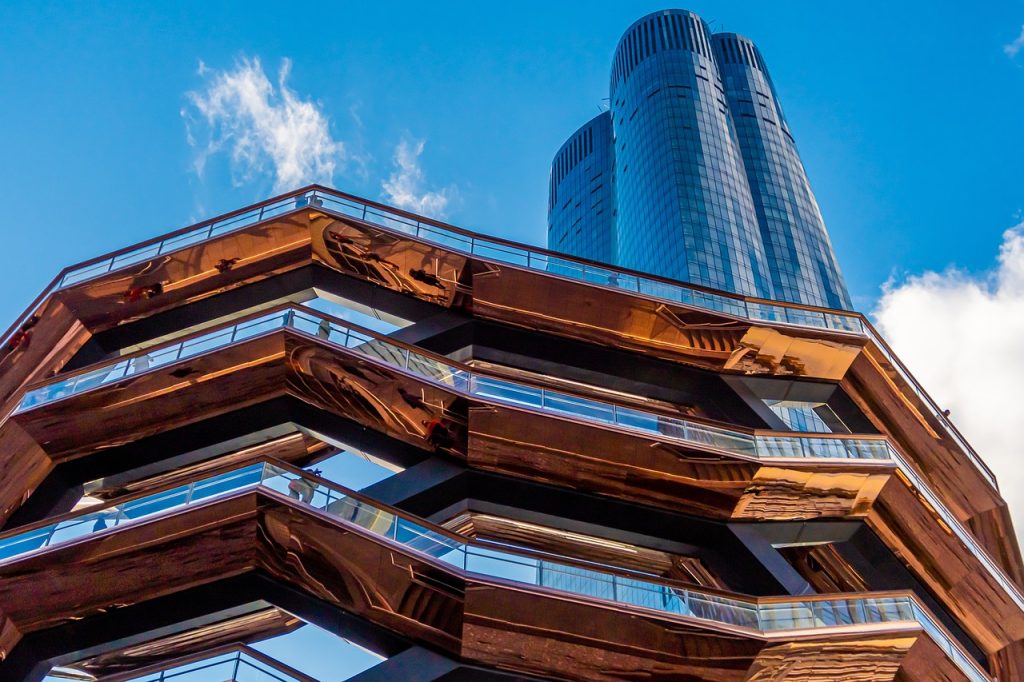
However, the picture isn’t all bleak. Innovations in sustainable construction materials are opening new possibilities. Take the Hudson Yards development in New York City, for example. By incorporating sustainable materials like low-carbon concrete and recycled steel, the project reduced its carbon footprint by 25% while maintaining high performance standards.
Beyond Environmental Benefits
“Sustainable materials aren’t just about being green – they’re about building better,” notes Sarah Chen, an architectural engineer with 20 years of experience. Modern sustainable materials often outperform their traditional counterparts:
- Better durability and longer lifespans
- Improved thermal performance
- Enhanced occupant health benefits
- Lower maintenance requirements
- Greater resilience to climate changes
What This Guide Offers
This comprehensive guide goes beyond simply listing eco-friendly alternatives. Instead, we provide practical insights drawn from real-world implementations, detailed cost analyses, and step-by-step guidance for successful integration of sustainable materials into your projects.
You’ll learn:
- How to evaluate the true costs and benefits of sustainable materials
- Practical strategies for implementation
- Ways to overcome common challenges
- Methods to maximize ROI
- Techniques for ensuring compliance with building codes
The decisions we make today about construction materials will impact our environment and communities for decades to come. As Jennifer Wong, a sustainable development consultant, puts it: “Every building project is an opportunity to either contribute to the problem or be part of the solution. The materials we choose make all the difference.“
Whether you’re a contractor looking to expand your sustainable offerings, an architect seeking cost-effective green solutions, or a property developer aiming to meet growing environmental standards, this guide will help you navigate the transition to sustainable construction materials effectively.
The Benefits of Sustainable Construction Materials
As the construction industry continues its shift toward environmental responsibility, the advantages of sustainable materials have become increasingly clear. These materials don’t just reduce environmental impact – they often outperform traditional options in ways that enhance the overall building performance and financial bottom line.
1. Reducing Environmental Footprint
The environmental benefits of sustainable materials are perhaps the most well-known. Traditional construction practices contribute significantly to global carbon emissions, with cement production alone accounting for 8% of the world’s total. By embracing materials like cross-laminated timber (CLT), which can actually store up to 1 ton of CO2 per cubic meter, construction projects can dramatically reduce their embodied carbon.
Beyond carbon, sustainable materials also promote resource conservation. Recycling materials like steel and concrete diverts millions of tons of waste from landfills each year, while rapidly renewable resources like bamboo help preserve natural habitats. As Melissa Garcia, a sustainability manager at a large real estate firm, explains, “Sustainable materials allow us to build the structures we need without depleting the finite resources our planet relies on.“
2. Driving Cost Savings
While sustainable materials often carry a higher upfront price tag, the long-term financial benefits can be substantial. “We’ve found that the initial 5-15% premium is more than offset by the 20-30% reduction in operational costs over the building’s lifetime,” says David Martinez. These savings come from improved energy efficiency, lower maintenance requirements, and extended material lifespans.
For example, a 20,000 sq ft office building constructed with sustainable materials may have a slightly higher initial cost of $4.6 million, compared to $4 million for a traditional build. However, the sustainable project’s annual operating costs of $120,000 are 40% lower than the $200,000 for the traditionally-built counterpart. Over 20 years, this translates to $1 million in net savings.
3. Enhancing Building Performance
Sustainable materials don’t just benefit the environment and the bottom line – they can also improve the overall performance of a building. Take structural components like recycled steel or CLT: these materials often exhibit superior durability, better adapting to climate changes and severe weather events. This resilience reduces the need for repairs and replacements over the building’s lifetime.
Sustainable insulation, ventilation, and interior finishing materials can also enhance indoor air quality, moisture management, and acoustic comfort – positively impacting the health and productivity of occupants. “Our tenants consistently report higher satisfaction levels in our sustainable buildings,” notes Jennifer Wong. “It’s not just about the numbers – it’s about creating spaces that people genuinely enjoy inhabiting.”
4. Unlocking New Revenue Streams
Beyond direct cost savings, sustainable construction materials can open up new revenue opportunities. High-performance green buildings often command premium rents, and some developers have even seen 10-20% increases in property values after achieving LEED certification. Insurance companies may also offer discounted rates for sustainable buildings, further boosting the financial case.
Moreover, the growing emphasis on corporate social responsibility and carbon reduction goals has created new revenue streams, such as the sale of carbon credits generated by sustainable projects. As David Martinez explains, “Sustainable materials aren’t just a cost center – they’re an investment that can deliver tangible financial returns.”
Cost Analysis of Sustainable Construction Materials
As the construction industry embraces sustainable practices, one of the most common questions that arises is, “How much more do these materials cost?” It’s a valid concern, as the upfront investment is a crucial factor in any building project. However, a comprehensive cost analysis reveals that the long-term financial benefits of sustainable materials often outweigh the initial premium.
The Upfront Investment
When comparing traditional and sustainable materials, the differences in upfront costs are clear. Structural components like steel and concrete tend to have a lower initial price point than alternatives like cross-laminated timber (CLT) or recycled steel. Finishing materials, such as bamboo flooring versus hardwood, can also carry a 15-40% higher price tag for the sustainable option.
“The reason for these premiums is twofold,” explains Sarah Chen, a sustainable construction specialist. “First, the manufacturing processes for many sustainable materials are still scaling up, which impacts production costs. Secondly, the specialized installation requirements and certification standards add to the overall investment.”
Unlocking Long-Term Savings
While the upfront costs may be higher, the long-term financial benefits of sustainable materials quickly become apparent. Energy savings alone can be substantial, with studies showing a 25-35% reduction in heating and cooling costs for high-performance buildings. This translates to $150-300 per month in savings for a typical residential project, and up to $40,000-$60,000 annually for a 20,000 sq ft commercial building.
Maintenance and durability also play a critical role. Recycled steel, for example, can last 50+ years with near-zero upkeep, compared to the regular painting and rust prevention required for traditional steel. Similarly, bamboo flooring needs refinishing every 10 years, rather than the 5-year cycle typical of hardwood.
Incentives and Certifications
To further sweeten the financial case, sustainable construction materials are eligible for a variety of government incentives and building certifications. Federal tax credits can offset up to 30% of material costs, while state and local programs offer rebates ranging from $2,500 to $20,000. Moreover, green building certifications like LEED and ENERGY STAR can increase property values by 4-8% and lower financing costs.
“The financial benefits go beyond just the materials themselves,” notes David Martinez. “Sustainable construction unlocks a whole ecosystem of incentives, cost savings, and revenue streams that traditional methods simply can’t match.”
Calculating the Full Return on Investment
When all the factors are considered – upfront costs, lifetime energy savings, reduced maintenance, and certification premiums – the return on investment for sustainable materials becomes clear. A recent case study of a 20,000 sq ft office building found that the sustainable approach yielded $1 million in net savings over a 20-year period, with a payback period of just 4.5 years.
This calculation, however, only scratches the surface. Sustainable materials can also deliver hidden benefits, such as improved employee productivity, reduced absenteeism, and faster lease-up rates – all of which contribute to the overall financial performance of a building.
| Material Type | Payback Period | Annual Savings |
|---|---|---|
|
Solar Tiles
🌞
|
5-7 years | 15-20% |
|
Recycled Steel
♻️
|
3-4 years | 10-15% |
|
Green Insulation
🌿
|
2-3 years | 25-30% |
|
Smart Windows
🪟
|
8-10 years | 20-25% |
Balancing Priorities for Long-Term Success
Ultimately, the decision to invest in sustainable materials requires a careful balancing act. Factors like a project’s lifecycle, the local climate, available incentives, and maintenance capabilities must all be considered. But as the construction industry continues its shift toward environmental responsibility, the financial case for sustainable materials becomes increasingly compelling.
“It’s not just about being eco-friendly anymore,” concludes Jennifer Wong. “Sustainable materials are simply the smarter, more profitable way to build.”
Implementation Guide for Sustainable Construction Materials
Implementing sustainable materials in construction projects requires careful planning, thorough understanding, and strategic execution.
Material Selection: Making the Right Choice
Selecting the right sustainable materials goes beyond simply choosing eco-friendly options. Your choice must balance environmental benefits with practical performance requirements. Consider a recent commercial project in Seattle, where architects initially specified bamboo flooring for its sustainability credentials. However, after analyzing the building’s high-traffic requirements and local climate conditions, they opted for recycled rubber flooring instead – offering both durability and environmental benefits.
Key factors to consider when selecting materials include:
- Environmental impact and carbon footprint
- Local availability and transportation requirements
- Installation complexity and available expertise
- Compatibility with existing building systems
- Cost-effectiveness and long-term maintenance needs
Building Code Compliance: Navigating Regulations
Meeting building codes while using sustainable materials requires careful attention to detail. Many sustainable materials are relatively new to the market, and building officials may require additional documentation or testing to approve their use. For example, when using cross-laminated timber (CLT) in multi-story buildings, you’ll need to provide fire-resistance ratings, structural performance data, and sometimes even third-party verification of manufacturing processes.
Working with building officials early in the project helps prevent delays and ensures compliance. Some key steps include:
- Early engagement with local building departments to understand specific requirements
- Documentation of material performance characteristics and testing results
- Regular communication with manufacturers for technical support and compliance data
- Development of detailed specifications that align with code requirements
Installation: Ensuring Success in the Field
Proper installation is crucial for the performance of sustainable materials. Take hempcrete, for instance. While it offers excellent insulation and carbon-sequestration properties, its installation requires specific expertise and conditions. One construction company in Portland learned this the hard way when improper mixing ratios and curing conditions led to significant delays and rework.
Best practices for installation include:
- Pre-Installation Planning “Before we begin any installation, we conduct a thorough site assessment,” says Sarah Chen, a sustainable construction specialist. “This includes evaluating storage conditions, checking weather forecasts, and ensuring our team has the right training and equipment.”
- Quality Control Implementation requires systematic quality control measures:
- Regular moisture content testing for bio-based materials
- Temperature and humidity monitoring during installation
- Documented inspection points throughout the process
- Performance verification after installation
Maintenance and Long-Term Performance
Sustainable materials often require different maintenance approaches than traditional materials. A successful implementation plan must include clear maintenance guidelines and monitoring protocols. For instance, green roofs need regular irrigation and plant maintenance, while recycled steel requires specific corrosion monitoring.
Develop a comprehensive maintenance plan that includes:
- Regular inspection schedules
- Specific cleaning and maintenance procedures
- Performance monitoring protocols
- Clear documentation requirements
Top Sustainable Construction Materials by Category
With a solid understanding of the benefits, costs, and implementation strategies for sustainable construction materials, let’s dive into the specifics of the top options currently transforming the industry.
Structural Materials
Cross-Laminated Timber (CLT)
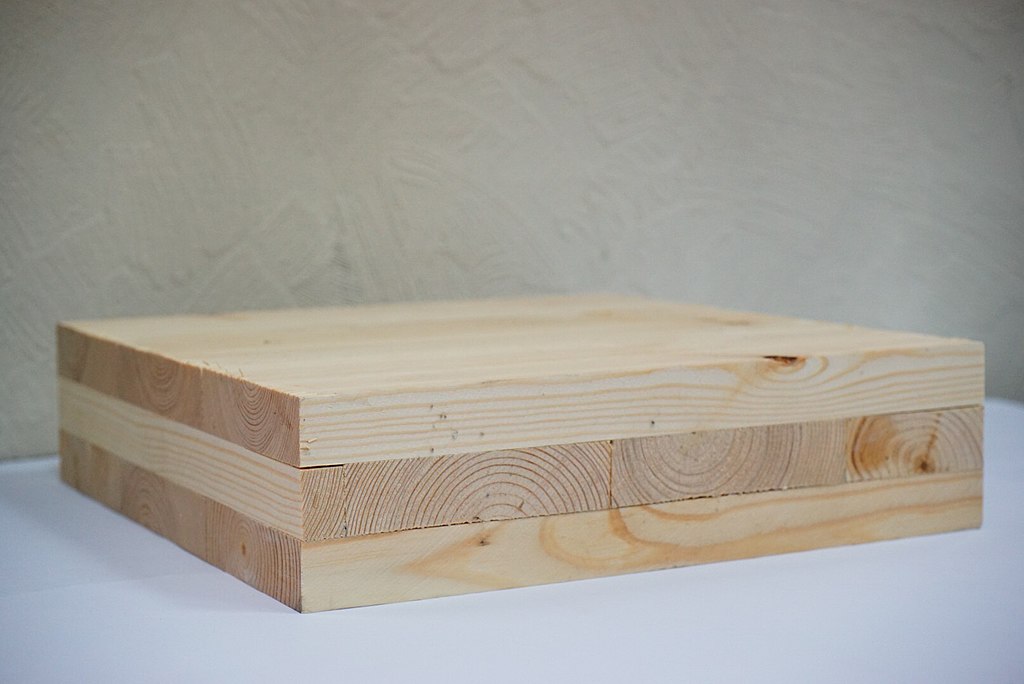
CLT is an engineered wood product that has emerged as a game-changing alternative to traditional steel and concrete. By layering timber boards at perpendicular angles and bonding them, CLT achieves exceptional strength and fire resistance. This lightweight material reduces foundation requirements and installation time, making it a popular choice for mid-rise buildings and additions. CLT also stores carbon, with each cubic meter able to sequester up to 1 ton of CO2.
Recycled Steel
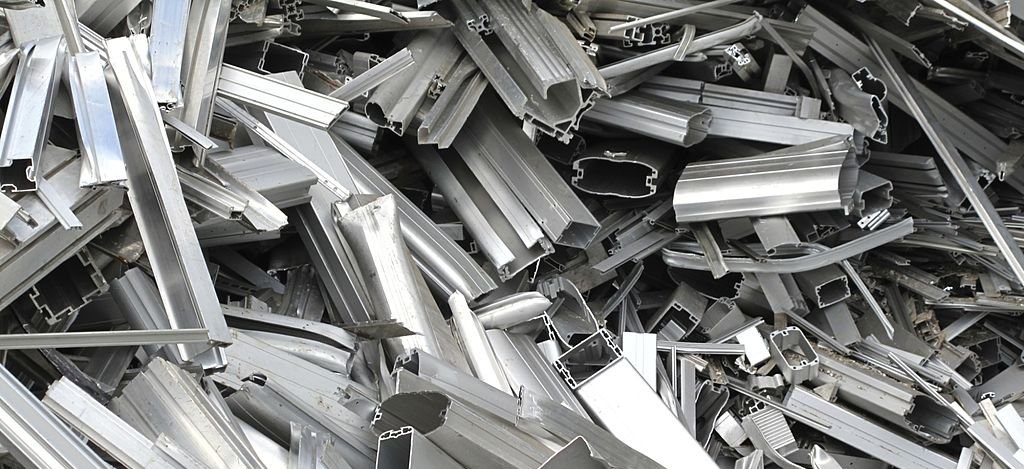
Recycling steel is one of the construction industry’s most established sustainable practices. Compared to virgin steel, recycled steel requires 60% less energy to produce and generates 50% fewer carbon emissions. It also maintains the same strength and durability as new steel, while offering a 5-10% cost savings. Recycled steel is commonly used for structural framing, reinforcement, and cladding.
Rammed Earth
Dating back thousands of years, rammed earth construction has seen a resurgence as a sustainable structural material. This method involves compacting a mixture of soil, gravel, and stabilizing agents into solid walls, creating thermal mass that helps regulate indoor temperatures. Rammed earth is incredibly durable, fire-resistant, and can last for centuries with minimal maintenance, making it a popular choice for residential and commercial projects in arid climates.

Insulation Materials
Hempcrete
Hempcrete is a lightweight, breathable insulation material made from the inner fibers of the hemp plant combined with a lime-based binder. This carbon-negative solution absorbs more CO2 than it emits during production and installation. Hempcrete offers excellent thermal and acoustic properties, while also resisting mold, pests, and fire. Its use is growing, particularly in non-load-bearing wall applications and as supplemental insulation.

Mycelium Insulation
Derived from the root structure of fungi, mycelium insulation is a fully compostable, biodegradable material that offers impressive insulating capabilities. Grown in molds, mycelium can be shaped into panels or loose-fill applications. This lightweight, fire-resistant insulation is an increasingly popular choice for eco-conscious construction projects.

Cork
Cork, harvested from the bark of cork oak trees, is a renewable, sustainable insulation material. It has excellent thermal and acoustic properties, is naturally resistant to moisture and pests, and provides a comfortable, resilient surface. Cork insulation is commonly used in flooring, wall panels, and roofing applications, particularly in regions with mild climates.

Finishing Materials
Bamboo Flooring
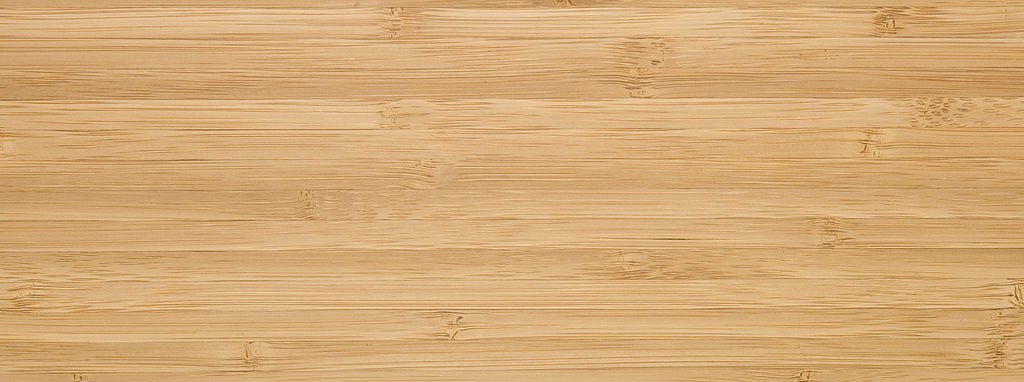
Bamboo is a rapidly renewable grass that can be harvested without killing the plant. Its exceptional strength-to-weight ratio and durability make it an ideal sustainable flooring material, able to match or exceed the performance of traditional hardwood. Bamboo also has a lower carbon footprint, as it absorbs significant amounts of CO2 as it grows.
Recycled Plastic Decking
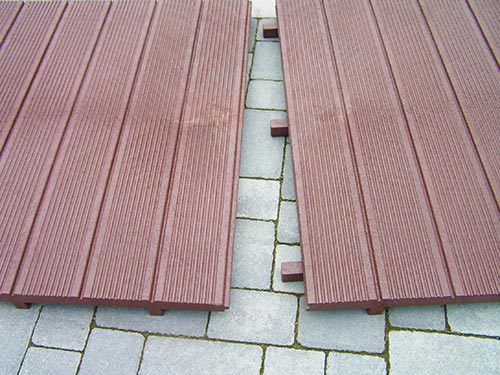
Innovative manufacturers are now producing durable, slip-resistant decking made from recycled plastic waste. This material is highly resistant to weathering, moisture, and pests, and requires minimal maintenance compared to wood. Recycled plastic decking diverts plastic from landfills while providing a long-lasting, eco-friendly alternative for outdoor living spaces.
Reclaimed Wood
The use of reclaimed wood, sourced from old buildings, barns, and other structures, offers a sustainable way to repurpose high-quality lumber. This material often has a unique character and aesthetic appeal, making it popular for interior finishes, furniture, and even structural elements. Reclaimed wood reduces the need for new timber harvesting and supports a circular economy in construction.
Case Studies: Sustainable Construction Materials in Action
While the benefits and applications of sustainable construction materials are clear, it’s often helpful to see how they perform in real-world projects. These case studies highlight the successful implementation of innovative sustainable solutions, showcasing the tangible impacts on the environment, building performance, and financial bottom line.
The Bullitt Center, Seattle, WA
Project Overview
Dubbed the “greenest commercial building in the world,” the Bullitt Center in Seattle is a living testament to the power of sustainable construction. Designed to meet the stringent requirements of the Living Building Challenge, this 6-story, 50,000 sq ft office building was constructed using a variety of cutting-edge sustainable materials.
Sustainable Materials Used
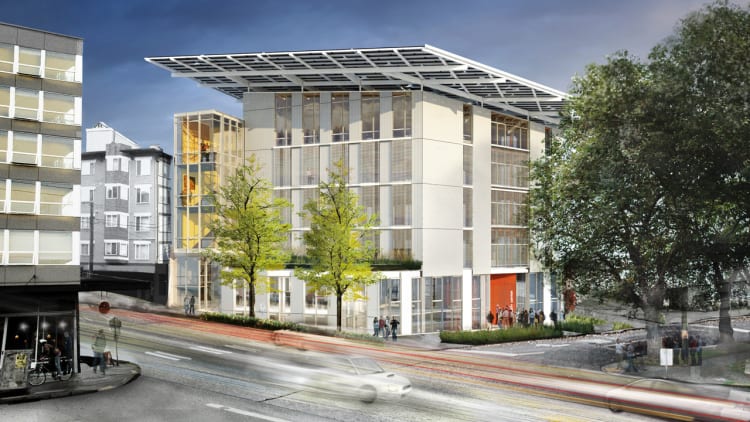
- Cross-Laminated Timber (CLT) for the structural frame
- Hempcrete insulation in exterior walls
- Reclaimed wood for flooring and interior finishes
- Salvaged steel for building components
- Green roof system with native plantings
Outcomes and Impact
- 83% reduction in energy use compared to a typical office building
- Net-zero energy consumption, generating more power than it uses
- 100% of stormwater managed on-site through rain gardens and cisterns
- Healthy indoor air quality, with no toxic materials used
- 15% lower operating costs than a traditional office building
The Switch, Melbourne, Australia
Project Overview
Located in the heart of Melbourne’s central business district, The Switch is a mixed-use development that showcases the integration of sustainable materials and practices. Designed to achieve a 6-star Green Star rating, the project encompasses residential, retail, and commercial spaces across its 16 floors.

Sustainable Materials Used
- Recycled concrete and aggregates for the foundation and structure
- Bamboo flooring and wall panels in residential units
- Mycelium-based insulation in exterior walls
- Photovoltaic solar panels on the roof
- Green roof and vertical gardens for improved thermal performance
Outcomes and Impact
- 50% reduction in embodied carbon compared to a traditional design
- 70% less potable water consumption through rainwater harvesting
- Enhanced indoor air quality and thermal comfort for occupants
- 25% higher rental rates for residential units due to sustainability features
- Positive financial returns, with a 7-year payback period on sustainable investments
Lessons Learned and Best Practices
These case studies demonstrate the tangible benefits of sustainable construction materials, from environmental impact to financial performance. Several key lessons emerge:
- Holistic Approach: Successful sustainable projects integrate materials, design, and technologies to maximize environmental and economic benefits.
- Stakeholder Collaboration: Early engagement with building officials, contractors, and end-users helps overcome implementation challenges.
- Long-Term Thinking: Evaluating lifecycle costs and building adaptability is crucial for sustainable projects to deliver lasting value.
- Embracing Innovation: Leading-edge materials and construction methods, while sometimes unfamiliar, can offer substantial advantages.
As the construction industry continues its transformation, these case studies provide a roadmap for leveraging sustainable materials to create high-performing, future-proof buildings
Conclusion: Embracing the Sustainable Future of Construction
The construction industry stands at a pivotal moment, faced with the urgent need to reduce its environmental impact while meeting the growing demand for high-performing, resilient buildings. Sustainable construction materials are at the heart of this transformation, offering solutions that not only minimize carbon footprints but also deliver tangible benefits in terms of cost savings, building performance, and occupant well-being.
As we’ve explored throughout this comprehensive guide, the advantages of sustainable materials extend far beyond simply being “eco-friendly.” These innovative products often outperform their traditional counterparts, providing superior durability, energy efficiency, and indoor air quality. Moreover, the financial case for sustainable construction is becoming increasingly compelling, with studies demonstrating significant lifetime cost savings and higher property values.
However, successfully integrating sustainable materials into construction projects requires careful planning, specialized expertise, and a willingness to embrace change. From navigating building codes and compliance requirements to overcoming supply chain challenges, the implementation process demands a holistic, collaborative approach. By drawing on the practical resources and real-world case studies presented in this guide, construction professionals can confidently navigate this transition and position their projects for long-term success.
As the industry continues to evolve, the role of sustainable construction materials will only grow more pivotal. Policymakers, regulators, and consumers are driving demand for greener buildings, while new technologies and materials are constantly emerging to push the boundaries of what’s possible. Those who proactively adopt sustainable practices will not only benefit from immediate cost and environmental savings but also position themselves as leaders in an industry undergoing a fundamental transformation.
Ultimately, the decisions we make today about the materials we use to build our structures will shape the world we leave for future generations. By embracing sustainable construction materials, we have the power to create a built environment that is not only more environmentally responsible but also more resilient, healthier, and financially sound. It’s a future worth investing in, for the sake of our planet, our communities, and our collective prosperity.
Frequently Asked Questions
Sustainable construction materials are eco-friendly, resource-efficient products used in building projects. They have a lower environmental impact compared to traditional materials, focusing on renewable, recyclable, or recycled sources.
Common examples of sustainable construction materials include:
- Recycled steel
- Bamboo
- Rammed earth
- Recycled concrete
- Cork
- Hempcrete
- Sustainably sourced timber
- Green roofing systems
- Mycelium-based insulation
There is no single “most sustainable” material, as sustainability depends on various factors like the local environment, building application, construction methods, and lifecycle impacts. However, some of the most sustainable options include bamboo, rammed earth, and recycled/reclaimed materials.
Yes, industrial hemp is considered a highly sustainable construction material. Hemp-based products like hempcrete offer excellent insulation properties, are carbon-negative, and are naturally resistant to mold, pests, and fire.
Sustainable materials offer numerous benefits, including reduced environmental impact, lower lifetime costs, enhanced building performance, and healthier indoor environments. They help meet green building standards, attract environmentally-conscious tenants, and future-proof construction projects.
When selecting sustainable materials, consider factors like local climate, building requirements, material availability, lifecycle impacts, installation expertise, and long-term costs. Evaluating these criteria will help you choose the most appropriate sustainable options for your specific project.
Many construction material suppliers now offer sustainable product lines. You can also consult online directories and databases that list verified sustainable material providers in your local area.


