
Table of Contents
Toggle
Cement hydrates upon the addition of water, demonstrating cohesion and solidity. It binds aggregates together through adhesion, crucially influencing the strength of mortar and concrete. The strength of these materials relies on the type and characteristics of the cement used, necessitating a minimum specified strength for structural purposes. Cement undergoes testing for compressive and tensile strengths.
Conditions Affecting Strength
Cement exhibits significant strength at early stages when it contains high lime or high alumina content. Additionally, small percentages of gypsum and Plaster of Paris tend to marginally increase strength. However, when present in quantities larger than 3 percent, these substances yield variable effects. The impact of clinker compounds on strength can be seen here. Beyond composition, the strength of cement is notably influenced by the degree of burning, the fineness of grinding, and the aeration it undergoes post-final grinding. Underburnt cement is prone to deficiencies in strength.
Compressive Strength of Cement
The compressive strength test of cement stands as a fundamental laboratory procedure utilized to ascertain the compressive strength of the material. This method involves subjecting a cement cube or cylinder to a compressive load until it reaches failure. The maximum load attained during this process is then used to determine the compressive strength of the cement.
Compressive strength serves as essential data for mix design in concrete. Through this test, both the quality and quantity of concrete can be controlled, allowing for the assessment of potential adulteration. It provides a critical benchmark in ensuring the integrity and durability of the concrete structure.
Apparatus for Compressive Strength Test of Cement
Vibration Machine
- The vibration machine used in this test should adhere to the specifications outlined in IS 10080 – 1982.
Cube Mould
- The mould utilized for this test must conform to the standards specified in IS 10080 – 1982, with a cube mould size of 70.6 mm.
Poking Rod
- The poking rod employed should meet the requirements detailed in IS 10080 – 1982.
Gauging Trowel
- Gauging trowels should comprise a blade of length 100-150 mm with straight edges, weighing 210 ± 10 g.
Balance
- Ensure the balance used has a permissible variation of load at 1000 g = ± 1.0 g, with a sensibility reciprocal not exceeding 2 permissible variations.
Standard Weights
- The permissible variation for the weight of cement should be specified as per the Table below (Table I )
Graduated Glass Cylinders
- Glass cylinders with a capacity ranging from 150 to 200 ml are necessary, maintaining a permissible variation of ± 1 ml.
Non-Porous Plate
Hopper
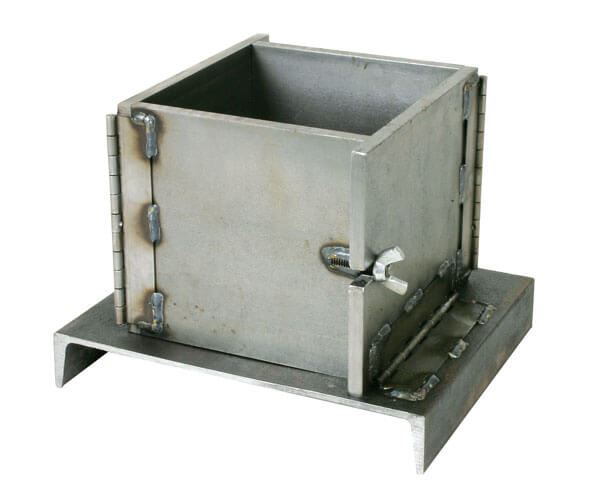

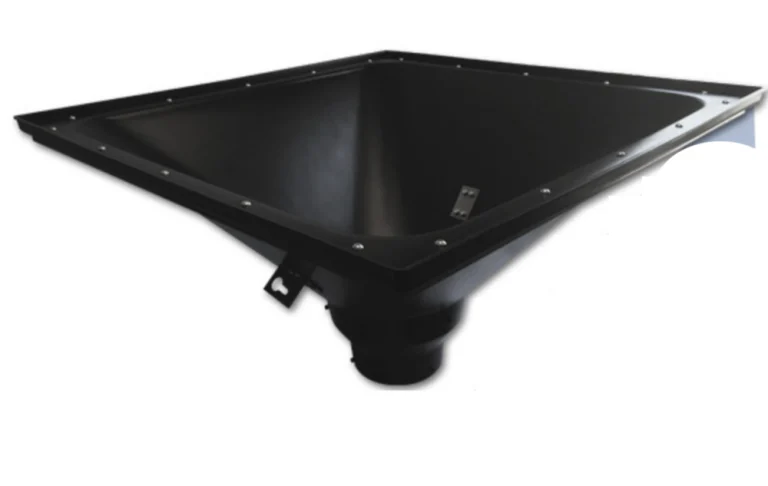
Table I
| Weight | Permissible Variation on Weight |
|---|---|
| 500 g | ± 0.35 g |
| 300 g | ± 0.30 g |
| 250 g | ± 0.25 g |
| 200 g | ± 0.20 g |
| 100 g | ± 0.15 g |
| 50 g | ± 0.10 g |
| 20 g | ± 0.05 g |
| 10 g | ± 0.04 g |
| 5 g | ± 0.03 g |
| 2 g | ± 0.02 g |
| 1 g | ± 0.01 g |
Want to practice MCQs on Cement?
From Portland to pozzolana, see how well you know the world of cement with our specialized MCQs.
Materials for Compressive Strength of Cement Test
- Cement: The sample of cement that you’ll be testing.
- Standard Sand: Conforming to IS 650 – 1991 standards. This sand is used as a standard material for the test.
- Potable/Distilled Water: Conforming to quality standards. Water is used in the preparation of the cement paste.
- Petroleum Jelly: Used for greasing the molds to prevent the cement from sticking to them.
- Oil: Sometimes used in place of petroleum jelly for greasing the molds.
Precautions of Compressive Strength of Cement Test
Clean Appliances: Ensure that all equipment used for mixing cement and sand is thoroughly clean. Any residue from previous tests could affect the current test’s accuracy.
Use of Potable/Distilled Water: Using high-quality water that meets standards is crucial. Any impurities in the water might affect the properties of the cement.
Separate Mixing for Different Cubes: Materials for creating different cubes should be mixed separately. This prevents variations in composition and ensures consistency within each cube.
Controlled Temperature: Maintain a specific temperature range of 27 ± 2 °C for the room, cement, and water used in the test. Temperature fluctuations can influence the setting and curing of cement.
Controlled Relative Humidity: Maintain a relative humidity of 65 ± 5% in the laboratory. Humidity levels can impact the curing process and subsequently affect the strength of the cement.
Moist Room Conditions: The moist room used for curing the samples should maintain specific conditions: a temperature of 27 ± 2 °C and a relative humidity of at least 90%. Proper curing conditions are crucial for accurate strength development in the cement samples.
Test Procedure for Compressive Strength of Cement
(A) Preparation of Test Specimens
1. Mix Proportion (1 : 3)
- Cement – 200 g
- Standard Sand – 600 g
- Water – [P/4 + 3.0] % of combined mass of cement and sand (Where P = % of water for making the cement paste of standard consistency)
2. Mixing
- Combine cement and standard sand on a non-porous plate.
- Dry mix for one minute with a trowel.
- Add the required water to the dry mix.
- Mix for 3 to 4 minutes until a uniform consistency is achieved.
3. Moulding Specimens:
- Cover halves of the mould with a thin film of petroleum jelly to prevent water leakage during vibration.
- Apply oil to the interior surfaces of the mould.
- Assemble the mould on the vibration machine table.
- Firmly clamp the mould on the machine.
- Use a suitable hopper for material filling during vibration.
4.Filling Mould
- Place prepared mortar in the cube mould.
- Prod the mortar to eliminate air entrainment and honeycombing.
- Fill any remaining mortar via hopper and prod again.
5.Vibration
- Vibration Speed = 1200 ± 400 vibration/min
- Time Period of Vibration = 2 min
6.Curing of Specimens:
- Place moulds in a moist room for 24 hours post-vibration.
- Submerge cubes in clean fresh water until testing, changing the water every 7 days.
- Maintain submerged water temperature at 27 ± 2 °C.
- Follow curing period as per respective hydraulic cement standards.
(B) Testing of Cubes
- Test cubes ensuring no packing between the cube and steel plates of the testing machine.
- Apply load steadily and uniformly, starting from 0, at a rate of 35 N/mm2/min.
- Testing Periods:
- Ordinary Portland Cement (OPC) – 3, 7, & 28 days
- Rapid Hardening Cement (RHC) – 1 & 3 days
- Low Heat Portland Cement – 3 & 7 days
Observation of Compressive Strength of Cement Test
| Time Period | Load at which the cement cube fails (P in N/mm2) | ||
|---|---|---|---|
| Cube 1 | Cube 2 | Cube 3 | |
| 3 days | |||
| 7 days | |||
| 28 days | |||
Calculation of Compressive Strength of Cement
To calculate the compressive strength of the cement samples using the provided formula, you can follow these steps:
- Determine Crushing Load (P): Obtain the crushing load values (in Newtons) for each cube from the observations.
- Calculate Area of Cube (A): The area of the cube subjected to the load is given as 5000 mm².
- Compute Compressive Strength: Use the formula Compressive strength=P/A to calculate the compressive strength for each cube.
- Calculate the Average: Find the average of the compressive strength values obtained from the three cubes.
Example Calculation:
Let’s assume:
Cube 1 Crushing Load (P) = 7500 N
Cube 2 Crushing Load (P) = 8200 N
Cube 3 Crushing Load (P) = 7800 N
Given: A=5000 mm²
Calculate Compressive Strength for each cube:
Cube 1: Compressive strength=7500/5000=1.5 N/mm²
Cube 2: Compressive strength=8200/5000=1.64 N/mm²
Cube 3: Compressive strength=7800/5000=1.56 N/mm²
Calculate the Average Compressive Strength:
Average = (1.5+1.64+1.56)/3=1.5667 N/mm² (approximated to the nearest significant figure)
The compressive strength of the given cement sample is 1.567 N/mm2.
Minimum specified strength for some of the cements
| Time Period | OPC (33 grade) | Portland Pozzolana Cement | Low Heat Portland Cement | Rapid Hardening Cement | High Alumina Cement |
|---|---|---|---|---|---|
| 1 day | – | – | – | 16.0 N/mm² | 30.0 N/mm² |
| 3 days | 16.0 N/mm² | 16.0 N/mm² | 10.0 N/mm² | 27.5 N/mm² | 35.0 N/mm² |
| 7 days | 22.0 N/mm² | 22.0 N/mm² | 16.0 N/mm² | – | – |
| 28 days | 33.0 N/mm² | 33.0 N/mm² | 35.0 N/mm² | – | – |
Highlights of Compressive Strength Test of Cement
| Step | Description |
|---|---|
| Step 1 | Take 185 g cement and 555 g standard sand in a non-porous tray (1:3 ratio) |
| Step 2 | Mix the cement and sand with a trowel |
| Step 3 | Add water of quantity P/4+3.0 % of wt of cem + sand {P = water reqd for std consistency} |
| Step 4 | Mix thoroughly to achieve a uniform mix for 3-4 minutes |
| Step 5 | Fill the mortar in the cube moulds of 70.6 mm size immediately after mixing |
| Step 6 | Compact the cube by tamping or in std specified manner on vibrating equipment at 12000 rpm for 2 minutes |
| Step 7 | Prepare 3 such moulds & place the cement cube with mould at 27 ± 2 °C & ≥ 90 % humidity for 24 hours OR Cover with wet gunny bags |
| Step 8 | After 24 hours, remove the cement cube from mould & immerse the cement cubes in clean water till they are taken out for testing |
| Step 9 | All 3 cubes are tested on the compressive testing machine |
| Step 10 | Note the failure load for the cube Calculate the strength of cement by = P/A (A = 50 cm2) |
| Step 11 | Average of the three strengths is the compressive strength of cement |
Frequently Asked Questions
Testing the compressive strength of cement is crucial for determining its ability to bear loads and its suitability for structural purposes. It ensures the quality and durability of concrete by providing essential data for mix design and controlling potential adulteration.
arious factors like composition (lime, alumina, gypsum content), degree of burning, fineness of grinding, and post-grinding aeration significantly influence the strength of cement. Factors like underburning can lead to deficiencies in strength.
Apparatus includes a vibration machine meeting IS 10080 – 1982 specifications, cube moulds (size: 70.6 mm), poking rod, gauging trowel, balance, standard weights, graduated glass cylinders, non-porous plate, and a hopper.
Precautions include ensuring clean equipment, using high-quality water, mixing materials separately for different cubes, maintaining controlled temperature (27 ± 2 °C), relative humidity (65 ± 5%), and specific curing conditions for accurate strength development.
The procedure involves preparing test specimens with specific mix proportions, molding, vibrating, curing, testing cubes at various time intervals, recording observations, and calculating the compressive strength using the obtained load values and cube area.
The minimum specified strengths vary for different types of cement like OPC (33 grade), Portland Pozzolana Cement, Low Heat Portland Cement, Rapid Hardening Cement, and High Alumina Cement at 1, 3, 7, and 28 days.


