Table of Contents
ToggleWhen it comes to constructing buildings, bridges, and other structures, the materials used play a crucial role in determining the overall strength, durability, and aesthetic appeal of the final product. Among the many options available, natural building stones have long been a preferred choice, offering a unique blend of practical and decorative qualities.
The types of building stones can be broadly classified based on their geological origin, each variety possessing its own distinct characteristics and applications. From the rugged grandeur of igneous rocks to the refined elegance of metamorphic varieties, the world of building stones is vast and fascinating.
Today, we will delve into the different types of building stones, exploring their unique properties, strengths, and ideal uses within the construction industry. Whether you’re an architect, engineer, or a homeowner seeking to incorporate natural stone elements into your project, understanding the nuances of these materials will empower you to make informed decisions that balance functionality and aesthetics.
Natural Building Stones
Building construction has long relied on the use of natural stones as a durable and versatile material. These stones, formed through geological processes over thousands of years, offer a wide range of properties and applications in the built environment. Let’s explore the key types of natural building stones:
i. Igneous Rocks
Igneous rocks, formed from the cooling and solidification of molten magma, are known for their exceptional strength and durability. Four prominent examples include:
1. Granite
Granite is a deep-seated igneous rock known for its exceptional hardness, compressive strength, and resistance to weathering. With a specific gravity between 2.63 and 2.75 and low water absorption (less than 1%), granite is both dense and durable. Its compressive strength, ranging from 77 to 130 N/mm², makes it highly suitable for heavy engineering works such as bridge abutments, piers, dams, sea walls, and lighthouses. Although challenging to work with due to its hardness, fine-grained varieties of granite can be polished to a high sheen, enhancing their aesthetic appeal. Its color, influenced by the type of felspar present, varies widely, making it popular for both structural and decorative applications.

2. Basalt and Trap
Basalt and Trap are also igneous rocks, formed on the earth’s surface through the rapid cooling of magma. Known for being hard, tough, and durable, these stones possess a high compressive strength ranging from 150 to 190 N/mm², making them ideal for construction. They are commonly used as road metal and concrete aggregate, with their durability ensuring stability in high-traffic areas. The distinct colors of basalt and trap, often appearing in shades of green, white, and blue, make them a versatile choice, especially when aesthetic features are needed in structural projects.

3. Serpentine
Serpentine is a compact and easily workable igneous stone, appreciated for its softness and distinctive color. Despite its durability, it can be sensitive to smoke and fumes, which may impact its longevity in polluted environments. Known for its aesthetic appeal, serpentine is widely used in ornamental works and quality building projects, adding a decorative touch with its unique texture and natural colors.

4. Syenite
Syenite is an igneous rock closely related to granite but distinguished by its higher alkali content. With a specific gravity of 2.65 to 2.95 and a compressive strength of approximately 65 N/mm², syenite is durable and resistant to weathering when free from lime and iron impurities. Its toughness and attractive appearance make it a versatile choice for various construction purposes. Syenite serves as a viable alternative to granite in applications requiring strength and durability, especially in road metal, paving, and ornamental works.

ii. Sedimentary Rocks
Sedimentary rocks, formed by the consolidation of natural sediments, offer unique characteristics and applications in building construction. Notable examples include:
5. Limestone
Limestone is sedimentary rocks primarily composed of the remains of marine organisms, giving them unique properties. Rich in calcium carbonate, these materials are relatively easy to work with, allowing for straightforward extraction and shaping. With a specific gravity ranging from 2.0 to 2.75 and a compressive strength of around 55 N/mm², limestone exhibit good durability when properly treated. Its versatility makes it suitable for a variety of construction applications, including flooring, paving, and the manufacture of lime and cement. Additionally, it is often used in architectural features due to their aesthetic appeal.

6. Sandstone
Sandstone is a sedimentary rock formed by the action of mechanical sediments. While generally lower in strength compared to igneous rocks, sandstone is easy to work with and dress, making it a practical choice for construction. It has a specific gravity ranging from 2.65 to 2.95 and a compressive strength of approximately 65 N/mm², ensuring decent durability when properly treated. Sandstone weathers well when free from lime and iron, adding to its longevity. It is available in a variety of color variations and is commonly used in the form of flagstone for paving, tile stone for roofing, and as a natural stone for ornamental work. Additionally, sandstone serves as grit for heavy engineering works and is suitable for flooring and roofing, as well as in the manufacture of lime and cement.

7. Kankar
Kankar is a sedimentary rock, often considered an impure form of limestone, primarily composed of calcium carbonate and clay. It features a nodular structure, which can vary in hardness, with some varieties being notably tough and durable.
This material is especially valued for its versatility; black kankar is commonly used as a building material, while nodular kankar is utilized to produce hydraulic lime. Kankar is ideal for rough stone masonry, stone pitching, and as a component in road metal, due to its durability and resistance to weathering. Additionally, it is effective in surfacing fancy paths in gardens and bungalows, adding both functionality and aesthetic appeal to landscaping projects.

8. Mooram
Mooram is a sedimentary rock known for its strong and hard characteristics. It is most suitable for surfacing fancy paths in gardens and bungalows, offering both durability and aesthetic appeal in landscaping projects.
iii. Metamorphic Rocks
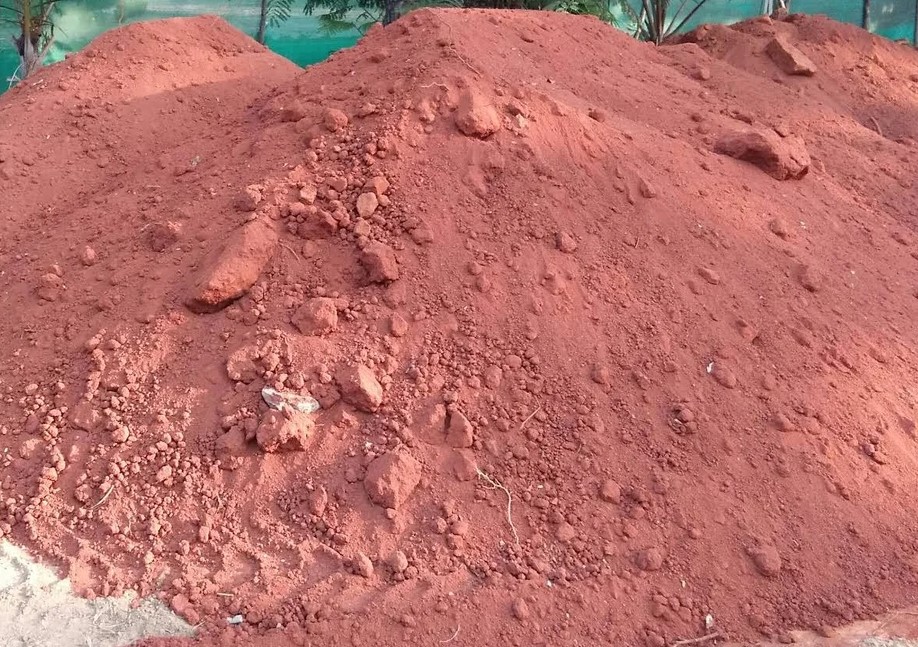
9. Laterite
Laterite is a metamorphic rock characterized by its sandy, clayey, and porous nature. Often referred to as sandy clay stone, laterite features a soft and easy-to-work-with composition, allowing it to be easily cut into blocks for construction purposes. Its distinctive porous or cellular structure contributes to its lightweight and versatile nature.
Rich in iron oxide, laterite is particularly suitable for rough stone masonry work, where it provides strength and durability. While it can be affected by the action of water, proper treatment can enhance its longevity. The nodular variety of laterite is especially valuable, yielding high-quality road metal used in various construction applications. Overall, laterite stands out as a practical material in both structural and decorative masonry projects.

10. Gnesis
Gneiss is a metamorphic rock known for its strength and durability. Characterized by its distinct banding, gneiss can be easily split into thin slabs, making it particularly suitable for applications such as railway tracks and stone pitching. Its robust nature allows it to withstand heavy loads, making it an excellent choice for rough stone masonry work and as road metal in construction projects. With its versatility and resilience, gneiss serves as a reliable material in various structural and infrastructural applications.

11. Marble
Marble is a highly valued metamorphic rock renowned for its exceptional carving and sawing properties, along with its striking aesthetic appeal. With a specific gravity of approximately 2.65 and a crushing strength of around 70 N/mm², marble is both hard and compact, making it durable for various applications.

Its ability to take a fine polish enhances its visual appeal, allowing it to be utilized in monuments, statues, and decorative works. Marble is particularly suitable for flooring and other ornamental applications, where its elegance and strength contribute to both functionality and beauty in architectural designs. Its versatility and luxurious appearance make marble a preferred choice in both residential and commercial projects.
12. Slate
Slate is a metamorphic rock distinguished by its natural black color and ability to be easily split into thin sheets. With a specific gravity of approximately 2.89 and a compressive strength ranging from 77 to 210 N/mm², slate is both hard and tough, making it an ideal material for various applications.
Renowned for its durability and water-resistant properties, slate is a popular choice for roofing applications. It is particularly suitable for roof covering, flooring, damp-proof courses (DPC), and partitions, where its resistance to moisture and ease of installation provide functional benefits. The aesthetic appeal of slate, combined with its practical advantages, makes it a preferred option in both residential and commercial construction projects.

Artificial Building Stones
In cases where durable natural stones are not readily available or cost-effective, artificial stones can be a viable alternative. These man-made materials are typically composed of cement, natural aggregates, and sometimes pigments to achieve desired properties and finishes. Some common types of artificial building stones include:
Cast Stone
Cast stone is made by mixing cement and natural aggregates, which can be molded into intricate forms and cast into various sizes. These stones are suitable for face work, as they can easily accommodate decorative features.
Terrazzo
Terrazzo is a composite material made by mixing cement and crushed stone, which is then polished to create a decorative flooring surface.
Bituminous Stone
Bituminous stone is created by impregnating granite or diorite with prepared or refined tar, producing a noise-dampening, wear-resistant, and dust-resistant surface.