What is the brick size used in Madras terrace roof?
🏛️ Understanding Madras Terrace Roofs
A Madras terrace roof is a traditional, multi-layered flat roofing technique known for its excellent thermal insulation and durability. It involves a specific combination of timber, brick, and lime mortar to create a robust and weather-resistant surface. The choice of materials, particularly the size and placement of the bricks, is critical to its structural integrity and performance.
🛠️ Construction Process of Madras Terrace Roof
The construction of a Madras terrace roof is a methodical, step-by-step process:
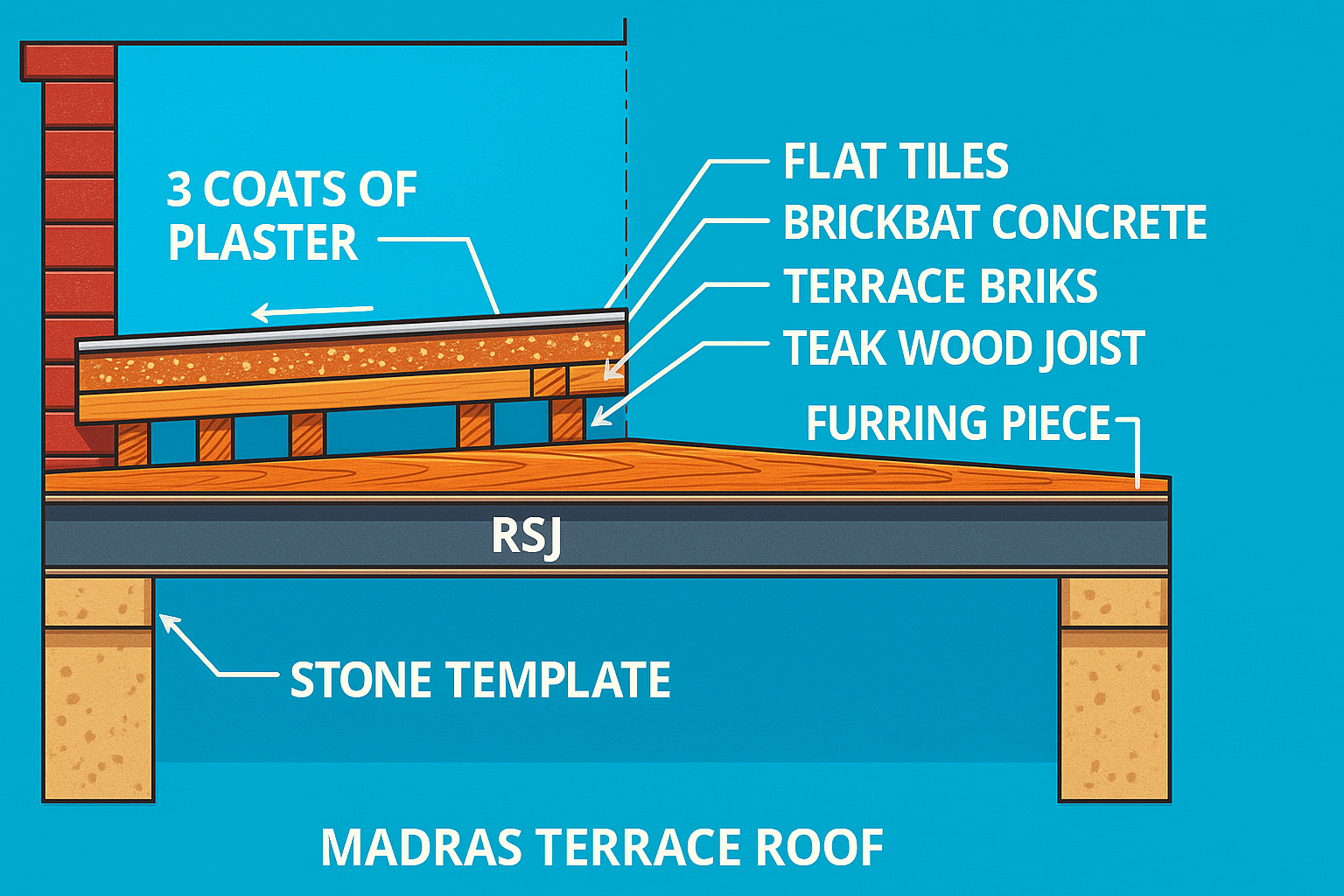
- Joist Placement: Teakwood joists are placed over rolled steel joists (RSJ). A sloping wooden piece, known as a "furring piece," is placed between them to create the necessary slope for water drainage.
- Brick Course: A course of specially prepared terrace bricks is laid diagonally on their edges across the joists, set in lime mortar. The standard size for these bricks is 15 cm x 75 cm x 25 cm.
- Concrete Layer: After the brick course sets, a layer of brick bat concrete (approx. 75 mm thick) is laid. This concrete is a mix of brickbats, gravel, sand, and lime mortar. It's rammed for several days to ensure compaction.
- Tiling: Flat tiles are then laid in two courses over the concrete layer.
- Finishing: Finally, the roof surface is finished with three coats of plaster, maintaining a gentle slope (typically 1 in 30) to ensure proper drainage.
ℹ️ Additional Information
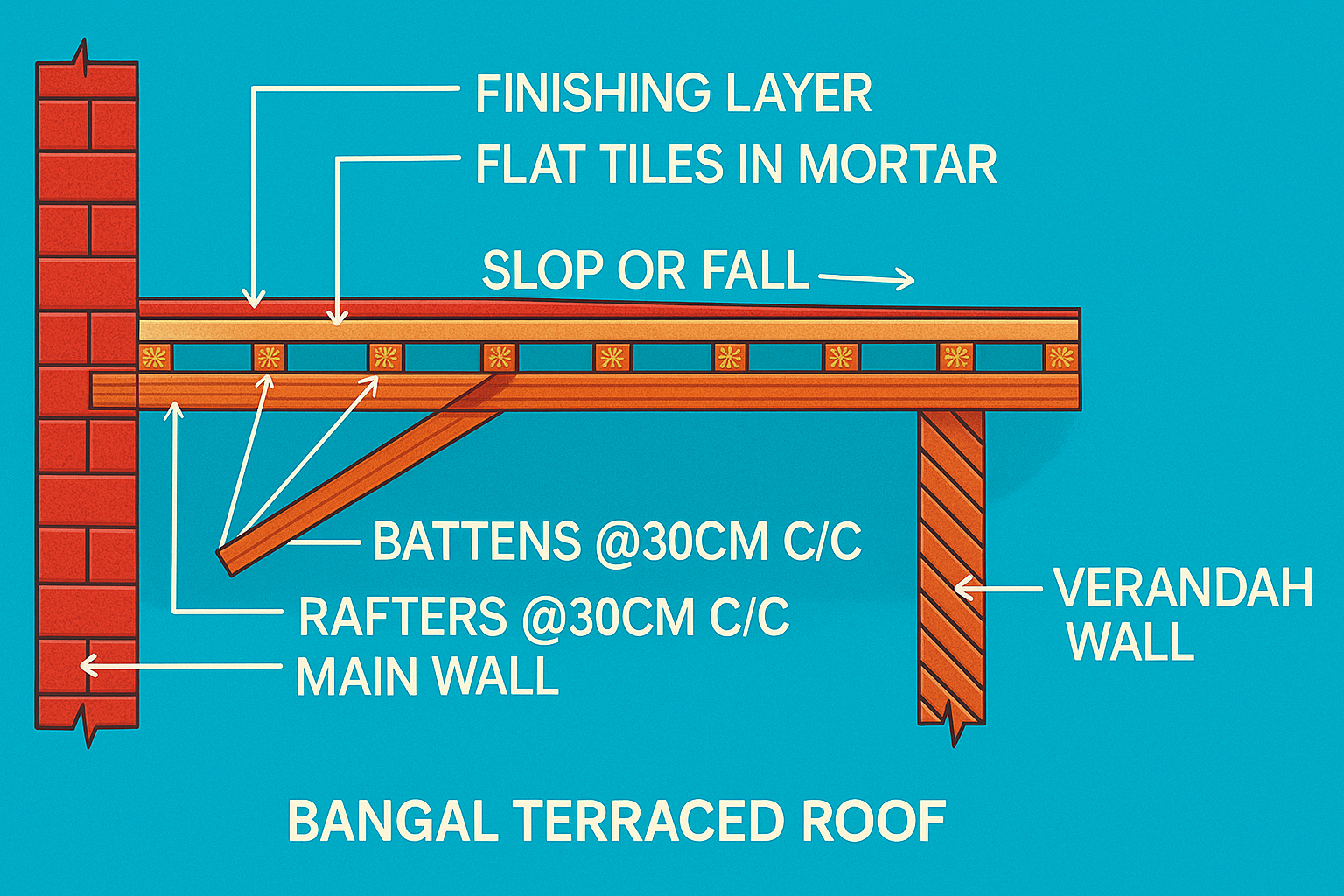
Bengal Terrace Roof: This is another type of traditional flat roof, commonly used in Bengal, particularly for covering verandahs. While similar in principle to the Madras terrace, it has its own distinct construction methods and material specifications, often tailored to the local climate and available materials.