
The durability of stones primarily depends on the environmental conditions they are exposed to and the various natural and chemical agents that contribute to their gradual deterioration. Understanding these factors can help in taking preventive measures to enhance the stone’s lifespan and maintain its quality over time.
Factors Causing Stone Deterioration
Rainwater Effects
Rain impacts stones both physically and chemically. Physically, rainwater erodes stone surfaces, while chemically, it causes reactions like decomposition, oxidation, and hydration of minerals within the stone. Alternating cycles of wetting from rain and drying from the sun introduce internal stresses, leading to gradual disintegration. In industrial areas, acidic rain exacerbates this process by reacting with the stone’s minerals, accelerating decay.Climate Conditions
Temperature variations, especially in extreme climates, contribute to stone deterioration. In hot regions, stones face repeated expansion and contraction, weakening their structural integrity. In cold climates, water infiltrates stone pores, freezing and expanding, which creates internal fractures. This is especially harmful to porous stones, which are more vulnerable to freeze-thaw cycles.Wind and Dust
Wind carrying grit and dust particles continuously abrades stone surfaces. Furthermore, wind-driven impurities and moisture can penetrate the stone’s pores, leading to dampness and internal breakdown. This process not only erodes the surface but also promotes further deterioration through embedded particles and moisture retention.Vegetation and Biological Growth
Roots of trees, weeds, and other vegetation that grow along stone joints introduce moisture and secrete organic acids, which cause chemical reactions with the stone, leading to decay. Additionally, moss and lichen growth can retain moisture, further exacerbating deterioration. Bacterial activity on accumulated dust can produce acids that intensify stone decay.Chemical Reactions
Stones containing minerals like alkaline silicate of alumina are vulnerable to chemical reactions with water, which lead to the formation of compounds like kaolinite. For example, in stones with feldspar, reactions produce hydrated silicate, which dissolves over time, eroding the stone. Similarly, stones containing iron compounds can oxidize, causing expansion and structural weakening.Frost and Temperature Fluctuations
In regions where temperatures fluctuate frequently, stones undergo repeated expansion and contraction. Stones with varied mineral compositions are especially prone to damage because different minerals expand at different rates, leading to internal stresses that cause cracks and splits.Airborne Pollutants
Airborne pollutants, including smoke, fumes, and acid gases, severely impact stones containing calcium carbonate or magnesium carbonate, like limestone. These pollutants lead to surface deterioration, although in some cases, they may form protective coatings on certain stones. Additionally, acidic fumes cause limestone and sandstone to degrade over time.Interactions Among Stones
When different types of stones are used together in construction, mutual decay can occur. For instance, chemicals from rainwater dripping from limestone to underlying sandstone can accelerate sandstone degradation.Organisms and Mollusks
Marine organisms, such as mollusks, can contribute to stone deterioration in coastal areas by boring holes into limestone and sandstone. These holes weaken the stone’s structure over time, leading to significant damage.
Want to practice MCQs on Bricks & Clay Products?
Build up your knowledge from bricks to tiles with our comprehensive set of multiple-choice questions.
Preservation of Stones
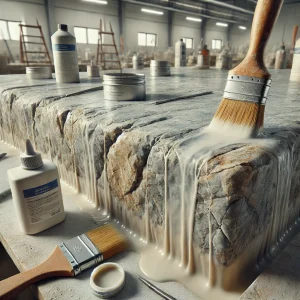
Preserving stones is essential to safeguard structures from weathering effects and maintain their aesthetic appeal. Proper preservation techniques significantly enhance stone durability, and various methods are used to protect them effectively.
Methods of Stone Preservation
Filling Pores and Voids
Stones have natural pores that allow moisture and pollutants to penetrate, leading to gradual decay. Filling these pores can strengthen the stone’s surface and prevent internal damage.Protective Coatings
Applying a protective layer of oils, such as coal tar or linseed oil, shields the stone from environmental exposure. This layer reduces the stone’s permeability and prolongs its durability. However, coatings are generally temporary and require periodic reapplication.Moisture Prevention
Avoiding moisture intrusion is crucial for stone longevity. Sealing techniques and protective barriers help prevent moisture from entering, which minimizes issues like freeze-thaw damage and chemical reactions within the stone.Material Selection in Industrial Areas
Stones rich in calcium carbonate, such as limestone, are particularly vulnerable in areas with industrial pollution. The acidic environment can deteriorate these stones quickly; therefore, they should be used cautiously in such settings.Avoid Mixing Incompatible Stones
When different types of stones are used in close proximity, reactions may occur that accelerate decay. For example, limestone and sandstone or other calcium-rich stones should be placed strategically to prevent mutual deterioration.Use of Inactive Building Materials
Building materials that do not react with stone should be selected to prevent chemical decay. These materials help create a stable environment for the stone without causing adverse reactions.Control of Vegetation Growth
Plants growing in stone joints can introduce moisture and organic acids, accelerating decay. Regular maintenance to remove plants and vegetation preserves the structural integrity of stone surfaces.Drying and Coating Treatments
Stones should be dried using heat (such as a blow lamp) before applying a protective layer. Coatings of paraffin, linseed oil, or paint can create a barrier, though these treatments must be repeated periodically. For linseed oil applications, boiling the oil and applying it in multiple layers improves its effectiveness, followed by a coat of diluted ammonia solution to reinforce protection.Washing and Surface Treatments
Regular washing with water or steam helps remove surface deposits like dirt and salts, which can damage the stone over time. Preservatives, such as a silicate solution of soda or potash, form a protective layer when combined with calcium chloride (known as Szerelmy’s liquid), which fills stone pores and forms an insoluble film of lime silicate. This film reinforces the stone’s durability and prevents moisture entry.Use of Lead Paint and Coal Tar
Applying lead paint or coal tar can preserve stones, but these coatings may alter the stone’s natural appearance. Coal tar, in particular, provides strong protection but often diminishes the stone’s visual appeal. Using chemicals sparingly is advisable, as some can introduce salts that lead to further decay.Baryta Solution in Industrial Zones
In areas with high levels of sulfur dioxide, a solution of barium hydrate (Ba(OH)₂) is applied to stones containing calcium compounds. This process helps counteract “sulfate attack,” where calcium sulfate forms on the stone surface and eventually flakes off. Baryta reacts with calcium sulfate, converting it into insoluble barium sulfate, which resists further environmental damage.The reactions involved are as follows:
Ba(OH)2+CaSO4→BaSO4+Ca(OH)2
Ca(OH)2+CO2→CaCO3+H2O
This method creates a durable layer of calcium carbonate, offering long-term resistance to pollutants.
Determining the long-term benefits of stone preservation is challenging. While certain treatments may slow decay temporarily, evidence of their sustained effectiveness over time remains inconclusive. Some treatments that initially appear successful may fail after several years. Consequently, using preservatives requires careful consideration, as their long-term impact on stone integrity is not fully proven and may, in some cases, be counterproductive.


