Table of Contents
ToggleErrors in Compass Traversing
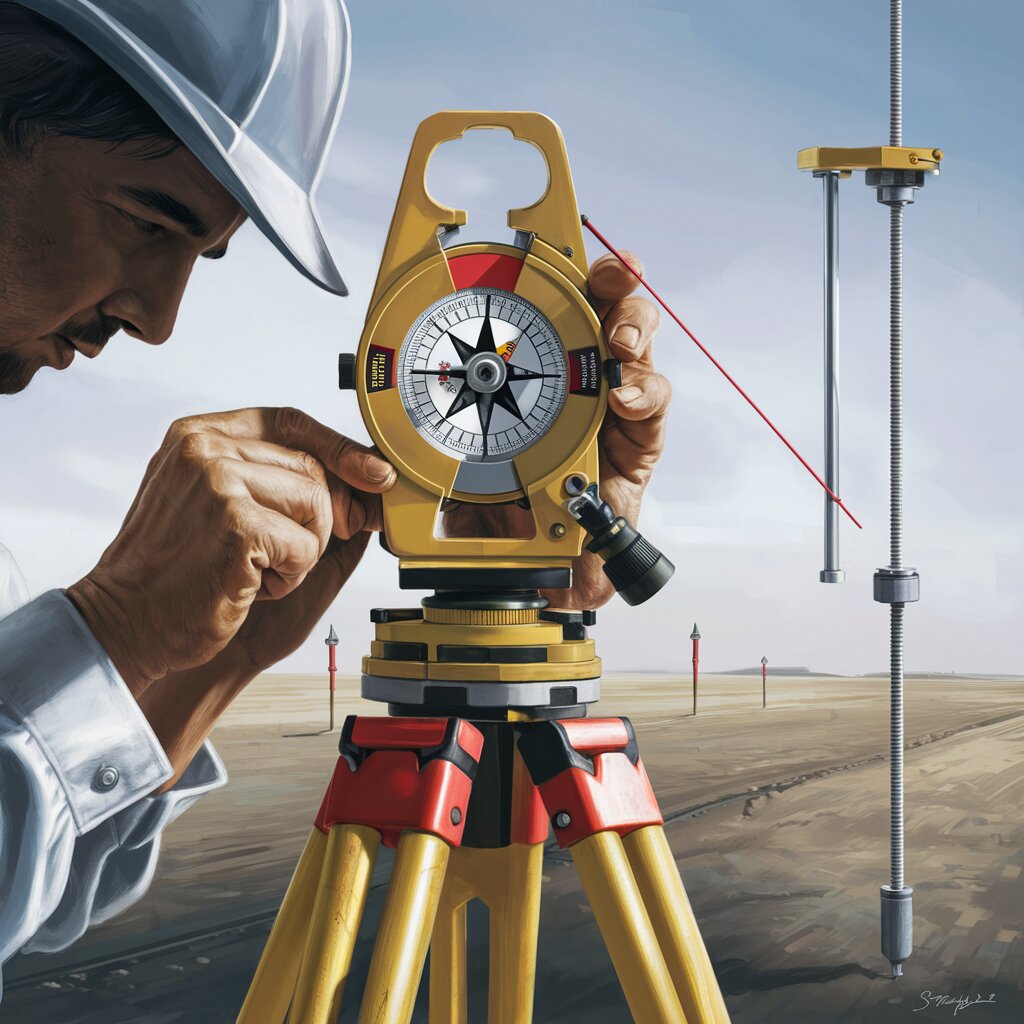
Compass traversing is susceptible to various errors that can be broadly categorized into two main types: Instrumental Errors and Observational Errors.
1.Instrumental Errors
Instrumental errors arise from defects or imperfections in the compass itself. These errors can significantly impact the accuracy of measurements and include the following:
Sluggish Magnetic Needle: The magnetic needle may become sluggish, often due to wear on the pivot. This dullness occurs when the needle is allowed to swing unnecessarily, even when the compass is not in use, reducing its sensitivity and precision.
Eccentric Pivot: If the pivot is not positioned exactly at the center of the graduated ring, the readings taken will be inaccurate. This eccentricity causes deviations in the measurements, leading to errors in traversing.
Non-Verticality of Sight Vanes: The sight vane, object vane, and pivot should align vertically. If they do not, the accuracy of the sighting process is compromised, leading to erroneous readings.
Non-Horizontality of the Graduated Ring: The graduated ring must be perfectly horizontal. Any tilt in the ring introduces errors in the angular measurements, distorting the results.
Unequal Divisions of the Graduated Ring: The accuracy of a compass relies on the equal division of its graduated ring. If the divisions are not uniform, it results in systematic errors in angle measurements.
Misalignment of the Line of Sight: The line of sight should pass through the exact center of the graduated circle. Any deviation from this central alignment can cause significant errors in the bearings observed.
Misalignment of Magnetic and Geometrical Axes: The compass needle should align with both the magnetic and geometrical axes. If these axes do not coincide, it leads to discrepancies between the observed and true bearings.
2. Observational Errors
Observational errors occur due to mistakes or inaccuracies made by the surveyor during the measurement process. These errors can significantly affect the reliability of the data and include the following:
Incorrect Bisection of Ranging Rods: Accurate bisection of ranging rods is crucial for precise measurements. Any deviation or misalignment while sighting the rods can lead to significant errors in the calculated distances and angles.
Incorrect Reading of the Compass: Misreading the compass is a common source of error. Whether due to parallax, haste, or inexperience, an incorrect reading can result in substantial deviations from the true bearing.
Incorrect Recording of Readings: Errors in recording the observed values can occur, especially if the surveyor is distracted or fatigued. Even a small mistake in documenting the readings can lead to incorrect conclusions and analyses.
Presence of Magnetic Substances Near Stations: Magnetic substances, such as metals, near the survey station can interfere with the magnetic needle, causing it to deflect from the true north. This local attraction results in erroneous bearings that do not reflect the true alignment.
Magnetic Variations in the Area: Changes in the Earth’s magnetic field, whether due to natural causes or human activities, can influence the compass needle. Such magnetic variations can lead to errors in the observed bearings, affecting the overall accuracy of the survey.
Precautions to Minimize Errors in Compass Surveying
To reduce the likelihood of instrumental and observational errors during a compass survey, the following precautions should be observed:
Careful Setup and Leveling: Ensure that the compass is set up on a stable surface and leveled precisely. An improperly leveled compass can introduce significant errors in the readings.
Stabilize the Needle: After setting up, gently press the brake-pin to stop the needle’s vibrations and allow it to come to rest. This prevents the needle from swinging excessively, which could lead to inaccurate readings.
Correct Viewing Angle: Always observe the needle by looking along its length rather than across it. This minimizes parallax errors, ensuring that the reading is accurate.
Protect the Pivot: When the compass is not in use, lift the magnetic needle off the pivot to prevent unnecessary wear. Prolonged contact between the needle and the pivot can dull the pivot, causing the needle to become sluggish.
Check Needle Movement: Before taking a reading, gently tap the compass box to confirm that the needle is swinging freely. This step ensures that the needle is not stuck or affected by friction, which could distort the reading.
Choose Stations Wisely: Select survey stations that are distant from any potential sources of magnetic interference, such as large metal objects or electrical equipment, to avoid local attraction affecting the needle.
Avoid Carrying Metal Objects: The surveyor should avoid carrying iron or steel objects, such as keys, which could influence the compass needle and lead to incorrect readings.
Take Fore and Back Bearings: To detect and correct for local attraction, always take both fore and back bearings of each line. If it is not possible to set the compass at the end of a line, take the bearings from an intermediate point along the line.
Double-Check Readings: For critical measurements, take two sets of readings at each station. Displace the needle slightly between readings to ensure consistency and accuracy.
Avoid Reversed Readings: Be cautious not to reverse the direction of readings. For example, avoid recording a reading of 25° to 20° instead of the correct 20° to 25°.
Prevent Electrostatic Interference: If the compass glass cover is dusted with a handkerchief, it can become charged with static electricity, causing the needle to stick to the glass. To prevent this, apply a moist finger to the glass before taking a reading.
Align Object and Eye Vanes: Ensure that both the object vane and eye vane are properly aligned and straight before making observations. Misalignment can lead to inaccurate sighting and erroneous measurements.