Table of Contents
ToggleThe alcohol method is a rapid field test used to estimate the moisture content in soil samples. Although it is less accurate than some laboratory methods, its speed makes it highly useful for on-site evaluations—provided that the soil is free of excessive clay, organic matter, gypsum, or calcareous materials.
Purpose of Alcohol Method
This method offers a quick way to measure the water content in soil. It is particularly advantageous when immediate results are required, such as during preliminary site investigations. However, caution should be exercised because the method may produce errors if the soil composition deviates from recommended conditions.
Equipment and Materials Required in Alcohol Method
Before beginning the test, ensure you have the following items:
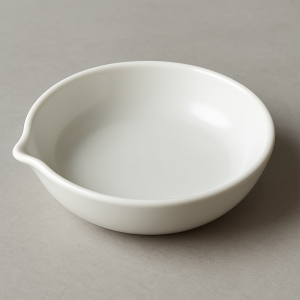
Evaporating Dish: Approximately 10 to 15 centimeters in diameter.
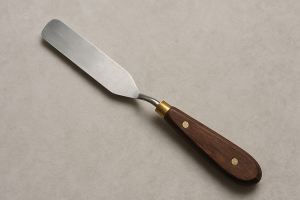
Palette Knife or Steel Spatula: With a blade around 10 centimeters long and 2 centimeters wide.
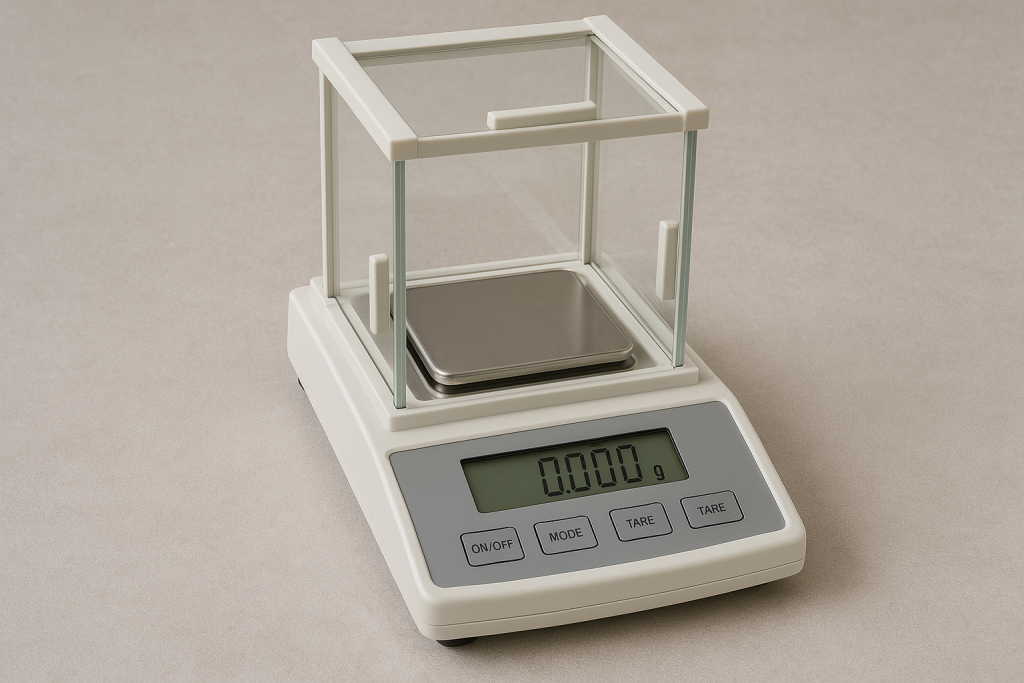
Sensitive Balance: Capable of measuring with an accuracy of at least 0.4% of the sample mass.
Methylated Spirit (Alcohol): Highly volatile and used to react with the water in the soil.

Testing Procedure
1. Sample Preparation
- Weighing the Dish :Begin by thoroughly cleaning and drying the evaporating dish, then record its weight (W₁).
Breaking Down Clumps: Place the soil sample in the evaporating dish. If there are any large lumps, break and crumble them to ensure a fine and uniform texture.
Weighing the Wet Sample: Record the mass of the wet soil sample along with the dish.(W2)
2. Mixing with Alcohol
Addition of Methylated Spirit: Add methylated spirit to the soil at a rate of about one millilitre per gram of soil. This ensures the soil is thoroughly wetted by the alcohol.
Uniform Mixing: Using the palette knife or spatula, mix the soil and alcohol well. Turn the mixture several times to break up any remaining clumps and achieve uniformity.
3. Ignition Process
Safe Ignition: Place the dish on a surface that is not affected by heat and ignite the methylated spirit. Since the alcohol is highly volatile, take proper fire safety precautions.
Continuous Stirring: While the alcohol burns, stir the mixture continuously with a spatula or knife to prevent any loss of soil.
4. Final Weighing
Cooling: After the alcohol has completely burnt away, allow the dish to cool.
Weighing the Dry Sample: Weigh the dish with the now-dry soil. This final measurement is used to calculate the moisture content.(W3)
Soil Moisture Content Calculation
The moisture content of the soil is determined by comparing the weights before and after the alcohol burns off. Use the following formula:
Where:
- W₁
- = Weight of the clean, dry dish
- W₂
- = Weight of the dish with the wet soil sample
- W₃
- = Weight of the dish with the dry soil after the alcohol has burned off
Note: Ensure all weights are measured in the same unit (grams or kilograms)
Limitations and Considerations required for Alcohol Method
While the alcohol method provides quick field estimates, it has some limitations:
Soil Composition: Soils containing significant amounts of clay, gypsum, calcareous substances, or organic matter may yield inaccurate results. In organic soils, for instance, the burning process may result in additional mass loss due to the decomposition of organic materials.
Temperature Control: The lack of precise temperature regulation during the test can lead to errors, especially for soils that release bound water at higher temperatures.
Field engineers and technicians should choose this method only when a rapid assessment is necessary and when the soil characteristics are appropriate for this test.
Related Soil Testing Methods
PYCNOMETER METHOD

Accurate laboratory technique using specific gravity principles to determine water content.
RADIATION METHOD

Non-invasive technique using radiation for in-situ soil moisture measurement.
TORSION BALANCE METHOD

Precision technique for fine-grained soils using specialized torsion balance equipment.
OVEN DRYING METHOD

The standard reference method for soil moisture determination in laboratory settings.