Ashok Sapkota

Ashok Sapkota is a dedicated engineer currently serving at the Department of Water Resources and Irrigation in Nepal. With a strong educational background, Ashok completed his Bachelor's degree from the Institute of Engineering (IOE), Pulchowk Campus, Nepal. He is currently pursuing a Master's degree in Construction Management at the same prestigious institution.

Ashok's professional expertise lies in water resources and irrigation engineering, where he applies his knowledge to contribute to Nepal's water management and agricultural development.

Beyond his professional commitments, Ashok is passionate about sharing his engineering insights. He regularly writes blogs on various engineering topics, aiming to educate and inspire others in the field.

With a combination of practical experience, ongoing advanced education, and a drive to share knowledge, Ashok Sapkota represents the new generation of engineers working to shape Nepal's future.

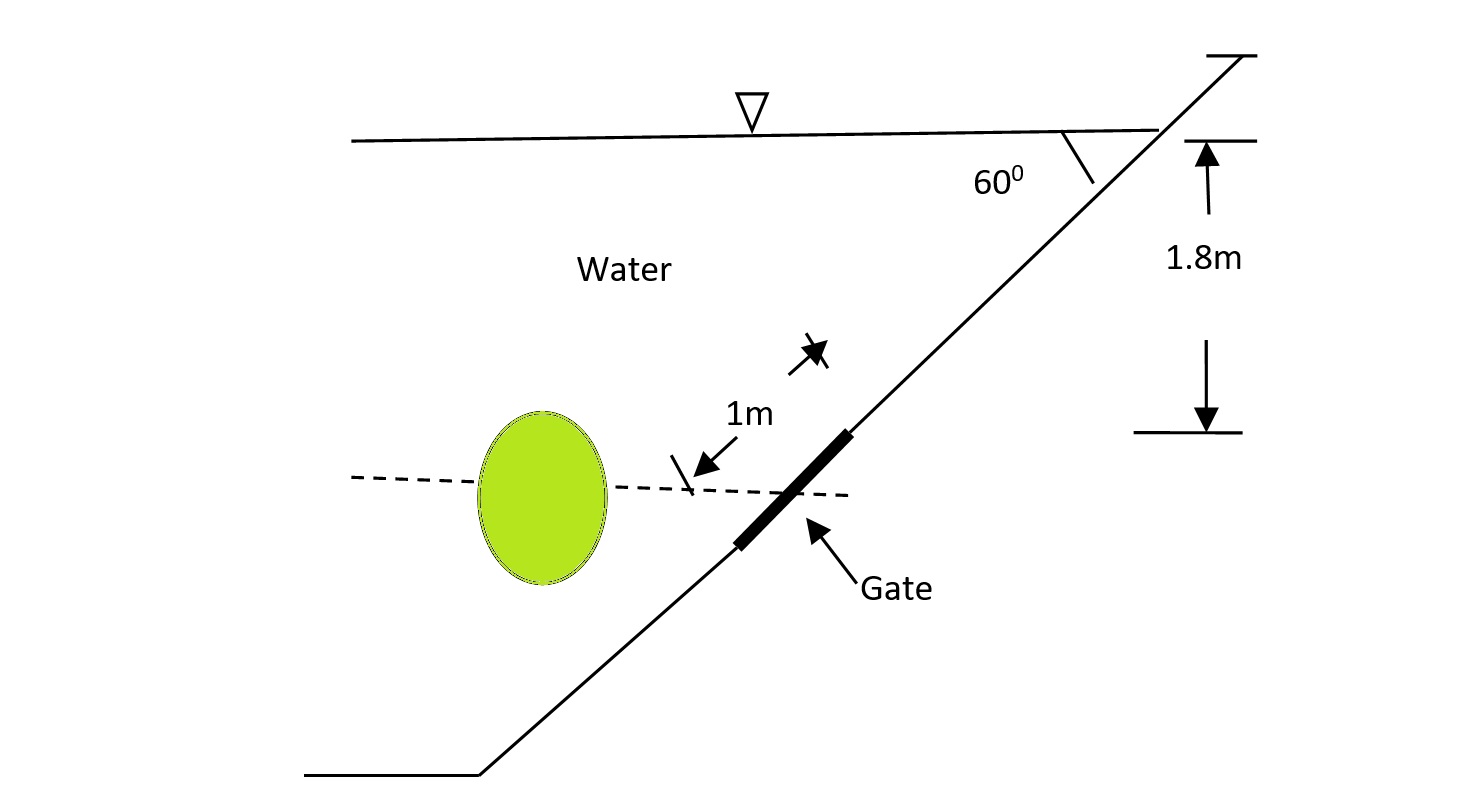
An inclined circular gate with water on one side is shown in the figure. Determine the total resultant force acting on the gate and the location of the center of pressure.

An inclined circular gate with water on one side is shown in the figure. Determine the total resultant force acting on the gate and the location of the center of pressure.

Gate Force Problems Problem Statement An inclined circular gate with water on one side is shown in the figure. Determine […]

An inclined circular gate with water on one side is shown in the figure. Determine the total resultant force acting on the gate and the location of the center of pressure. Read More »

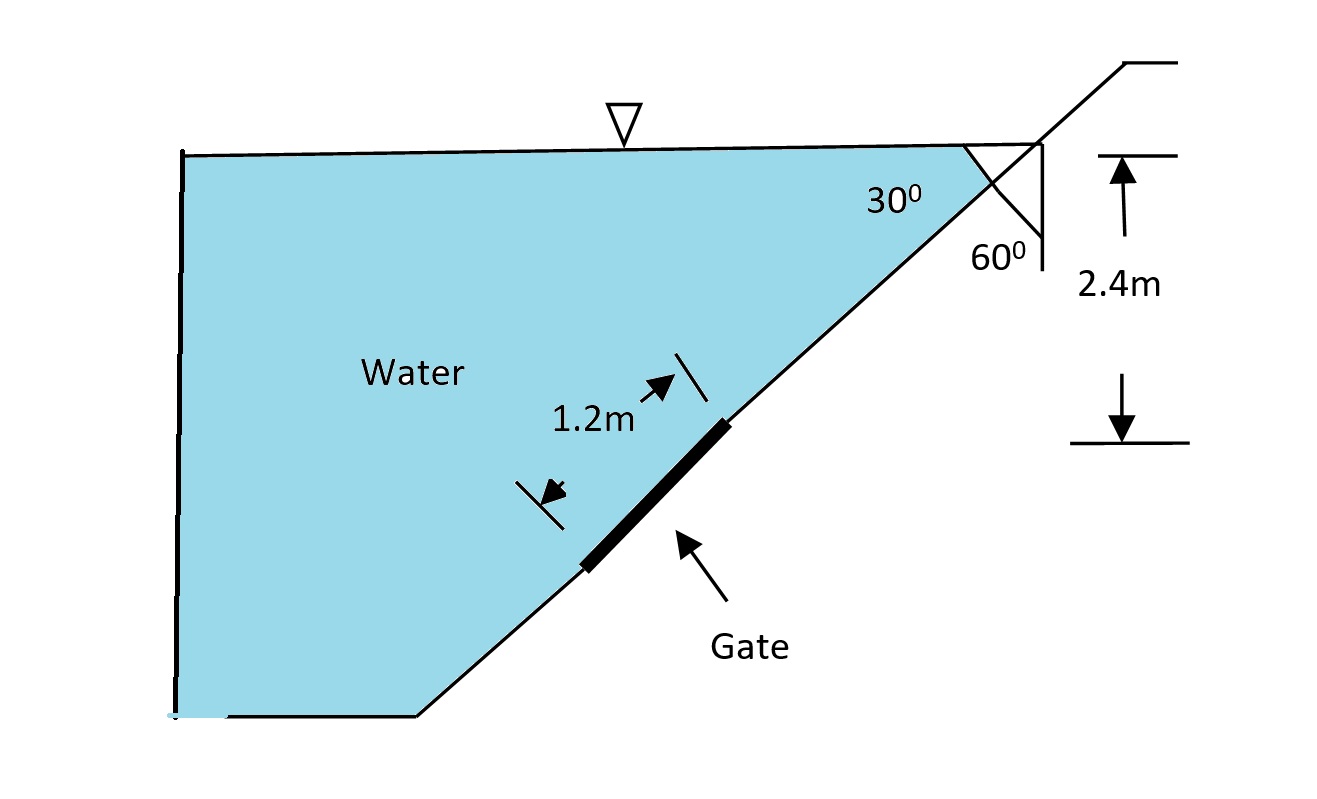
An inclined rectangular gate (1.5 m wide) contains water on one side. Determine the total resultant force acting on the gate and the location of the center of pressure.

An inclined rectangular gate (1.5 m wide) contains water on one side. Determine the total resultant force acting on the gate and the location of the center of pressure.

Gate Force Problems Problem Statement An inclined rectangular gate (1.5 m wide) contains water on one side. Determine the total

An inclined rectangular gate (1.5 m wide) contains water on one side. Determine the total resultant force acting on the gate and the location of the center of pressure. Read More »

A vertical rectangular gate, 1.4 m high and 2 m wide, contains water on one side. Determine the total resultant force acting on the gate and the location of the center of pressure.

A vertical rectangular gate, 1.4 m high and 2 m wide, contains water on one side. Determine the total resultant force acting on the gate and the location of the center of pressure.

Gate Force Problem Problem Statement A vertical rectangular gate, 1.4 m high and 2 m wide, contains water on one

A vertical rectangular gate, 1.4 m high and 2 m wide, contains water on one side. Determine the total resultant force acting on the gate and the location of the center of pressure. Read More »

Figure below shows a pipe containing a liquid of sp gr 0.8 connected to a single column micromanometer. The area of reservoir is 60 times that of the tube. The manometer liquid is mercury. Find the pressure in the pipe.

Figure below shows a pipe containing a liquid of sp gr 0.8 connected to a single column micromanometer. The area of reservoir is 60 times that of the tube. The manometer liquid is mercury. Find the pressure in the pipe.

Manometer Problem Problem Statement A pipe containing a liquid with a specific gravity of 0.8 is connected to a single-column

Figure below shows a pipe containing a liquid of sp gr 0.8 connected to a single column micromanometer. The area of reservoir is 60 times that of the tube. The manometer liquid is mercury. Find the pressure in the pipe. Read More »

An 8cm diameter piston compresses manometer oil into an inclined 7mm diameter tube, as shown in figure below. When a weight W is added to the top of the piston, the oil rises an additional distance of 10cm up the tube. How large is the weight, in N?

An 8cm diameter piston compresses manometer oil into an inclined 7mm diameter tube, as shown in figure below. When a weight W is added to the top of the piston, the oil rises an additional distance of 10cm up the tube. How large is the weight, in N?

Piston and Manometer Problem Problem Statement An 8 cm diameter piston compresses manometer oil into an inclined 7 mm diameter

An 8cm diameter piston compresses manometer oil into an inclined 7mm diameter tube, as shown in figure below. When a weight W is added to the top of the piston, the oil rises an additional distance of 10cm up the tube. How large is the weight, in N? Read More »

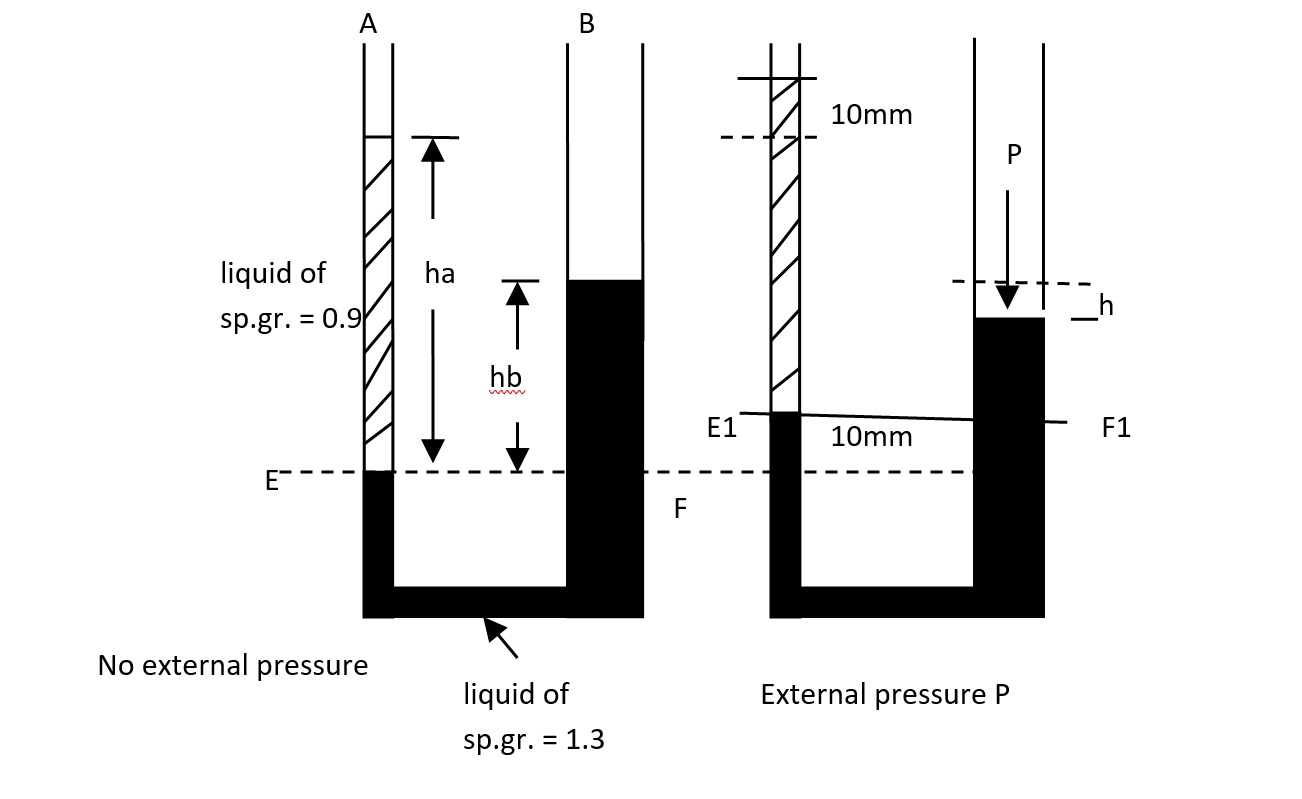
The diameters of the limbs A and B of a U-tube shown in fig. are 5mm and 20mm respectively. The limb A contains a liquid of sp. gr. 0.9 while the limb B contains a liquid of sp.gr. 1.3. The fig. shows the position of the liquids in the two limbs. Find what pressure should be applied on the surface of the heavier liquid in limb B so that the rise in level in the limb A is 10mm.

The diameters of the limbs A and B of a U-tube shown in fig. are 5mm and 20mm respectively. The limb A contains a liquid of sp. gr. 0.9 while the limb B contains a liquid of sp.gr. 1.3. The fig. shows the position of the liquids in the two limbs. Find what pressure should be applied on the surface of the heavier liquid in limb B so that the rise in level in the limb A is 10mm.

Problem Statement The diameters of the limbs A and B of a U-tube are 5 mm and 20 mm, respectively.

The diameters of the limbs A and B of a U-tube shown in fig. are 5mm and 20mm respectively. The limb A contains a liquid of sp. gr. 0.9 while the limb B contains a liquid of sp.gr. 1.3. The fig. shows the position of the liquids in the two limbs. Find what pressure should be applied on the surface of the heavier liquid in limb B so that the rise in level in the limb A is 10mm. Read More »

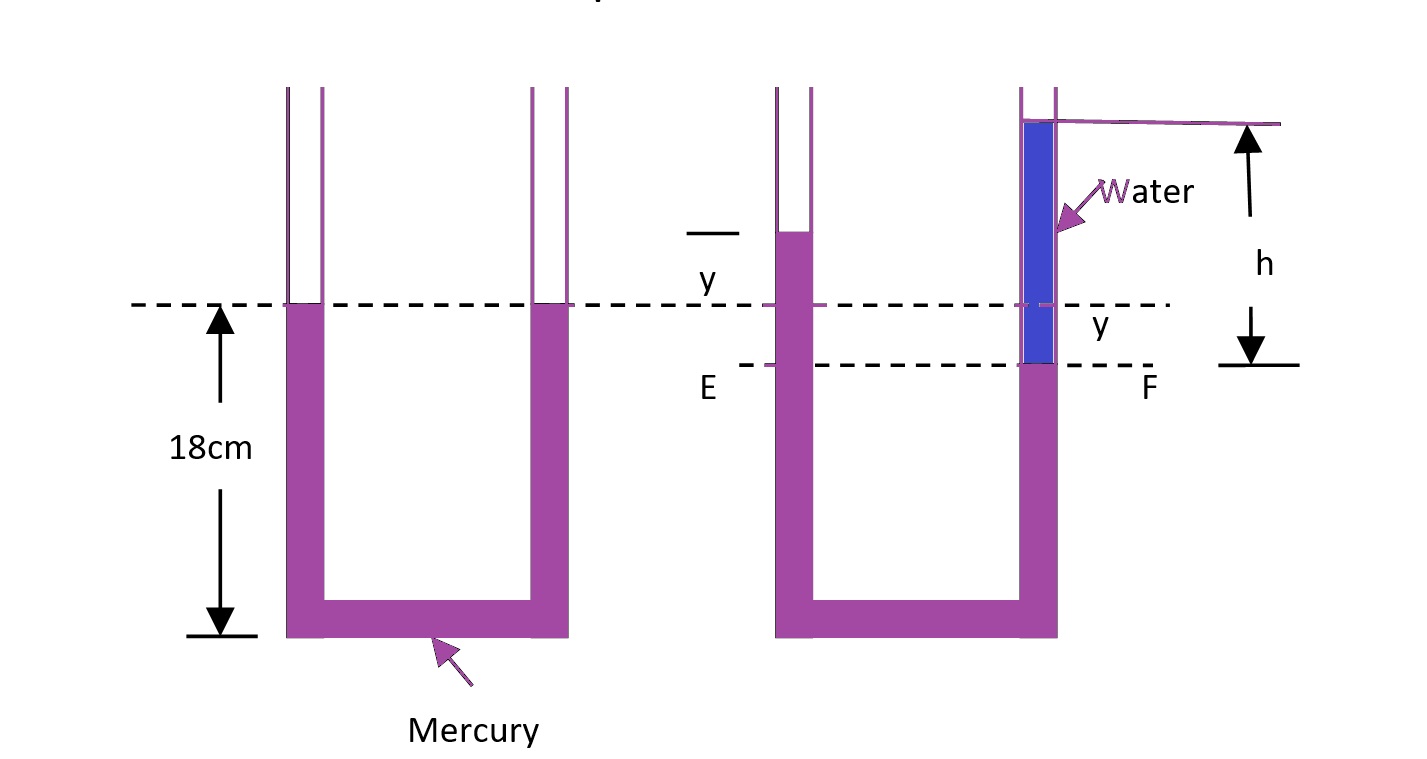
The fig. shows a 1cm diameter U-tube containing mercury. If now 20cc of water is poured into the right leg, find the levels of the free liquid surfaces in the two tubes.

The figure shows a 1 cm diameter U-tube containing mercury. If 20 cc of water is poured into the right leg, determine the levels of the free liquid surfaces in the two tubes.

Problem Statement The figure shows a 1 cm diameter U-tube containing mercury. If 20 cc of water is poured into

The figure shows a 1 cm diameter U-tube containing mercury. If 20 cc of water is poured into the right leg, determine the levels of the free liquid surfaces in the two tubes. Read More »

Figure shows a conical vessel having its outlet at A to which a U-tube manometer is connected. The reading of the manometer indicated in the figure pertains to the situation when the vessel is empty, i.e. the water surface is at A. Find the reading of the manometer when the vessel is completely filled with water.

Figure shows a conical vessel having its outlet at A to which a U-tube manometer is connected. The reading of the manometer indicated in the figure pertains to the situation when the vessel is empty, i.e. the water surface is at A. Find the reading of the manometer when the vessel is completely filled with water.

Problem Statement A conical vessel with an outlet at point A is connected to a U-tube manometer. Initial manometer reading

Figure shows a conical vessel having its outlet at A to which a U-tube manometer is connected. The reading of the manometer indicated in the figure pertains to the situation when the vessel is empty, i.e. the water surface is at A. Find the reading of the manometer when the vessel is completely filled with water. Read More »

A manometer is attached to a tank containing three different fluids as shown in fig. What will be the difference in elevation of the mercury column in the manometer (i.e. y)?

A manometer is attached to a tank containing three different fluids as shown in fig. What will be the difference in elevation of the mercury column in the manometer (i.e. y)?

Problem Statement A manometer is attached to a tank containing three different fluids as shown in the figure. What will

A manometer is attached to a tank containing three different fluids as shown in fig. What will be the difference in elevation of the mercury column in the manometer (i.e. y)? Read More »

Scroll to Top