Ashok Sapkota

Ashok Sapkota is a dedicated engineer currently serving at the Department of Water Resources and Irrigation in Nepal. With a strong educational background, Ashok completed his Bachelor's degree from the Institute of Engineering (IOE), Pulchowk Campus, Nepal. He is currently pursuing a Master's degree in Construction Management at the same prestigious institution.

Ashok's professional expertise lies in water resources and irrigation engineering, where he applies his knowledge to contribute to Nepal's water management and agricultural development.

Beyond his professional commitments, Ashok is passionate about sharing his engineering insights. He regularly writes blogs on various engineering topics, aiming to educate and inspire others in the field.

With a combination of practical experience, ongoing advanced education, and a drive to share knowledge, Ashok Sapkota represents the new generation of engineers working to shape Nepal's future.

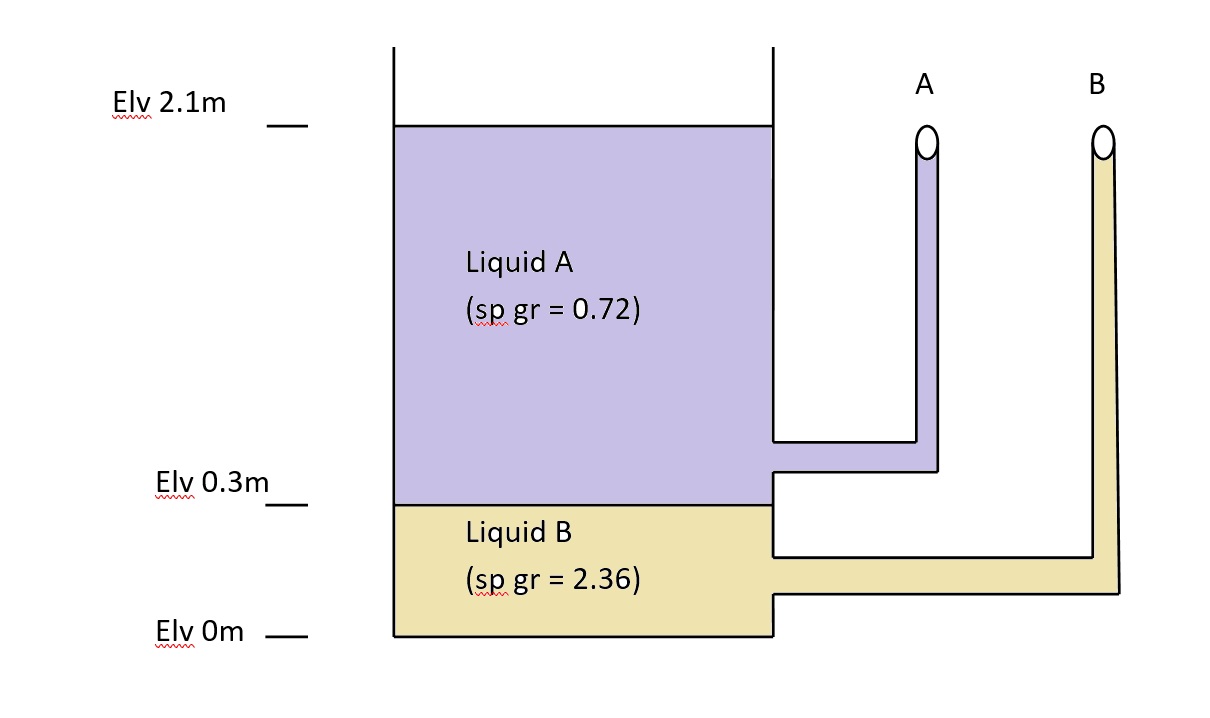
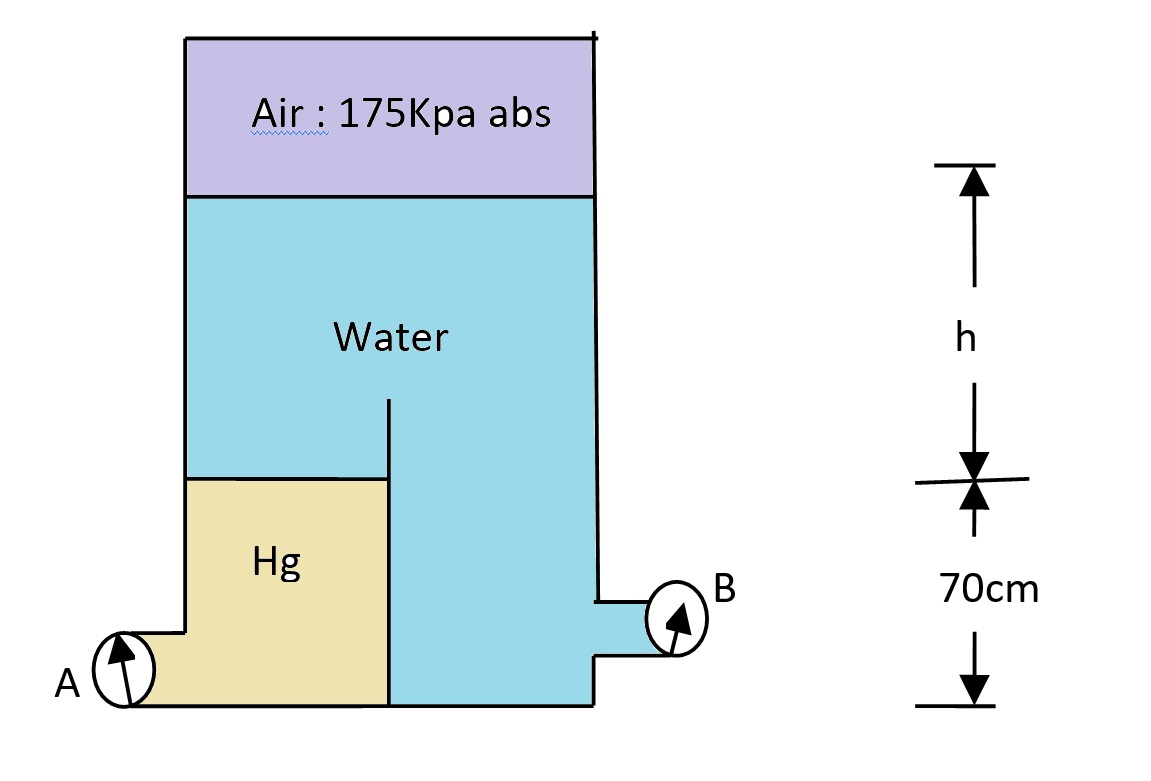
For the open tank, with piezometers attached on the side, containing two different immiscible liquids as shown in the fig., find (a) the elevation of liquid surface in piezometer A, (b) the elevation of liquid surface in piezometer B, and (c) the total pressure at the bottom of the tank.

For the open tank, with piezometers attached on the side, containing two different immiscible liquids as shown in the fig., find (a) the elevation of liquid surface in piezometer A, (b) the elevation of liquid surface in piezometer B, and (c) the total pressure at the bottom of the tank.

Problem Statement For the open tank, with piezometers attached on the side, containing two different immiscible liquids as shown in
For the open tank, with piezometers attached on the side, containing two different immiscible liquids as shown in the fig., find (a) the elevation of liquid surface in piezometer A, (b) the elevation of liquid surface in piezometer B, and (c) the total pressure at the bottom of the tank. Read More »

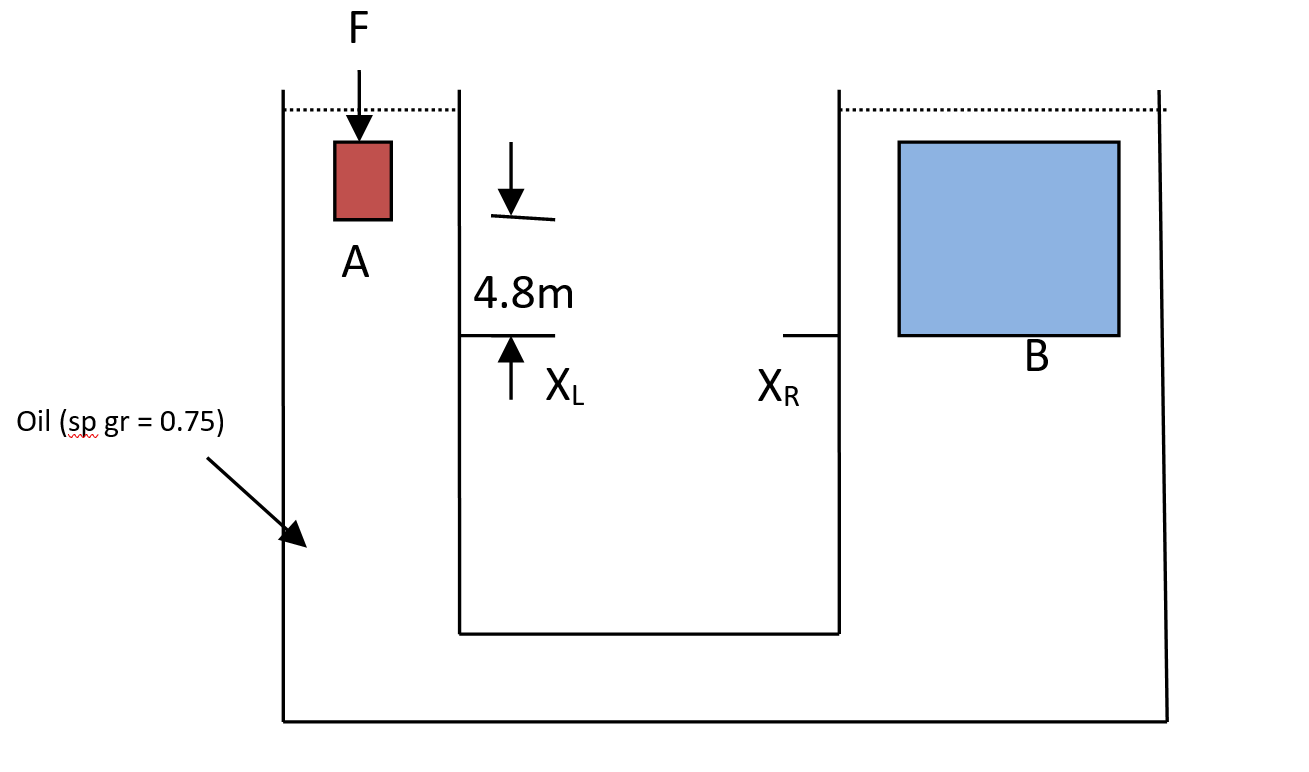
In the fig., the areas of the plunger A and cylinder B are 38.7 cm2 and 387 cm2, respectively, and the weight of B is 4500 N. The vessel and the connecting passages are filled with oil of specific gravity 0.75. What force F is required for equilibrium, neglecting the weight of A?

In the fig., the areas of the plunger A and cylinder B are 38.7 cm2 and 387 cm2, respectively, and the weight of B is 4500 N. The vessel and the connecting passages are filled with oil of specific gravity 0.75. What force F is required for equilibrium, neglecting the weight of A?

Problem Statement In the figure, the areas of the plunger A and cylinder B are \( 38.7 \, \text{cm}^2 \)
In the fig., the areas of the plunger A and cylinder B are 38.7 cm2 and 387 cm2, respectively, and the weight of B is 4500 N. The vessel and the connecting passages are filled with oil of specific gravity 0.75. What force F is required for equilibrium, neglecting the weight of A? Read More »

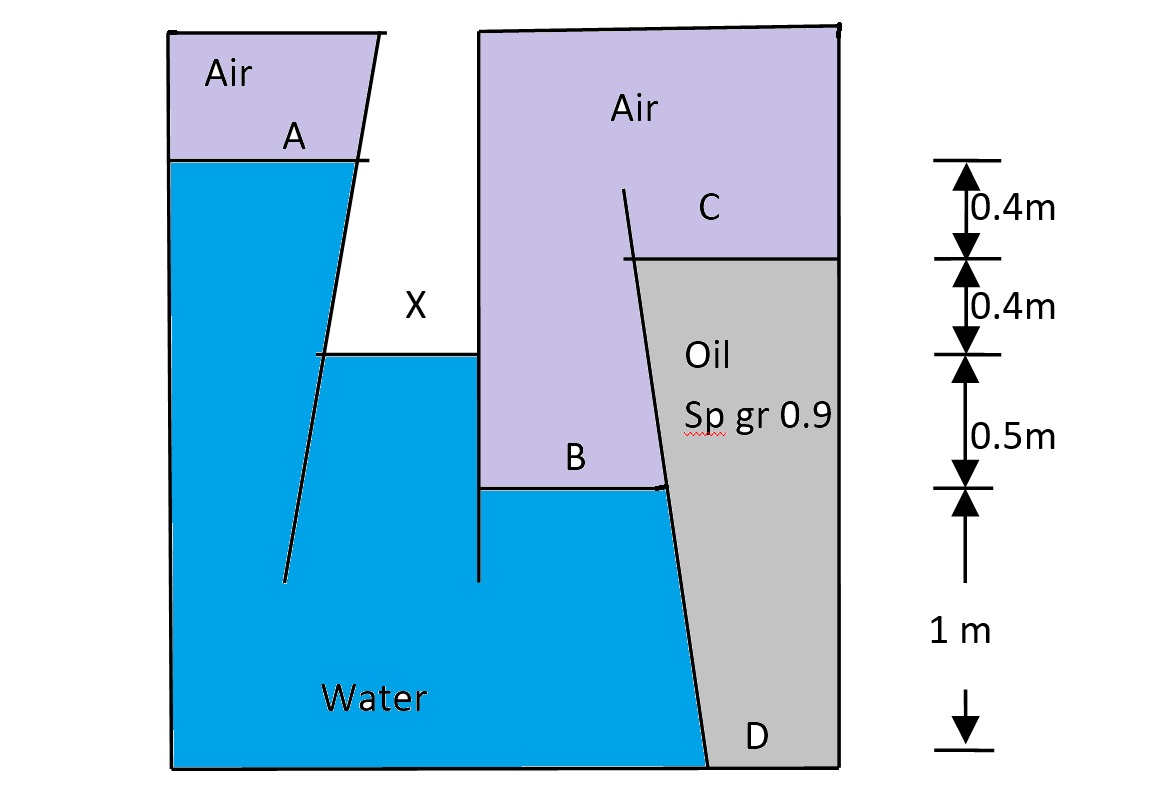
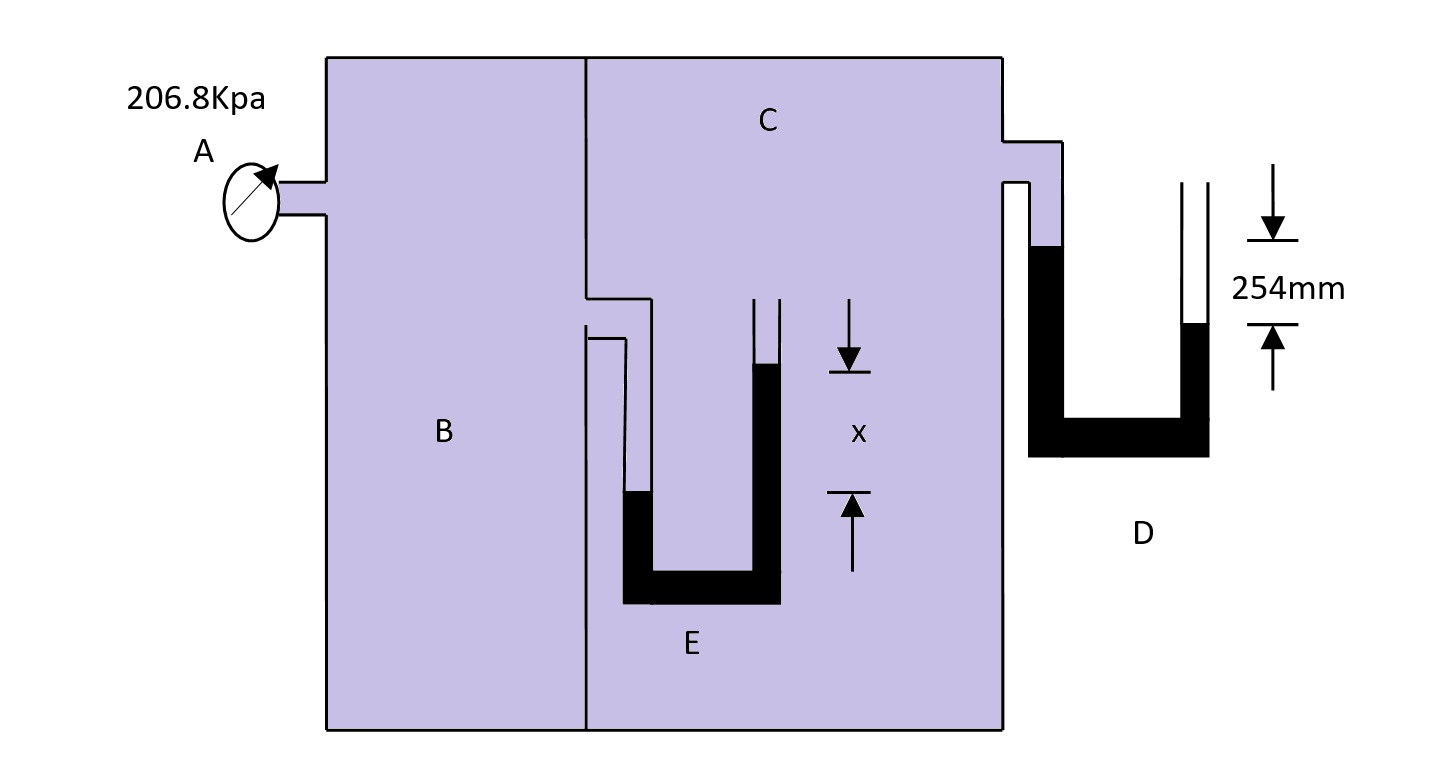
Compartments B and C in the fig. are closed and filled with air. The barometer reads 99.98 Kpa. When gages A and D read as indicated, what should be the value of x for gage E? (Hg in each tube)

Compartments B and C in the fig. are closed and filled with air. The barometer reads 99.98 Kpa. When gages A and D read as indicated, what should be the value of x for gage E? (Hg in each tube)

Problem Statement Compartments B and C in the figure are closed and filled with air. The barometer reads \( 99.98
Compartments B and C in the fig. are closed and filled with air. The barometer reads 99.98 Kpa. When gages A and D read as indicated, what should be the value of x for gage E? (Hg in each tube) Read More »

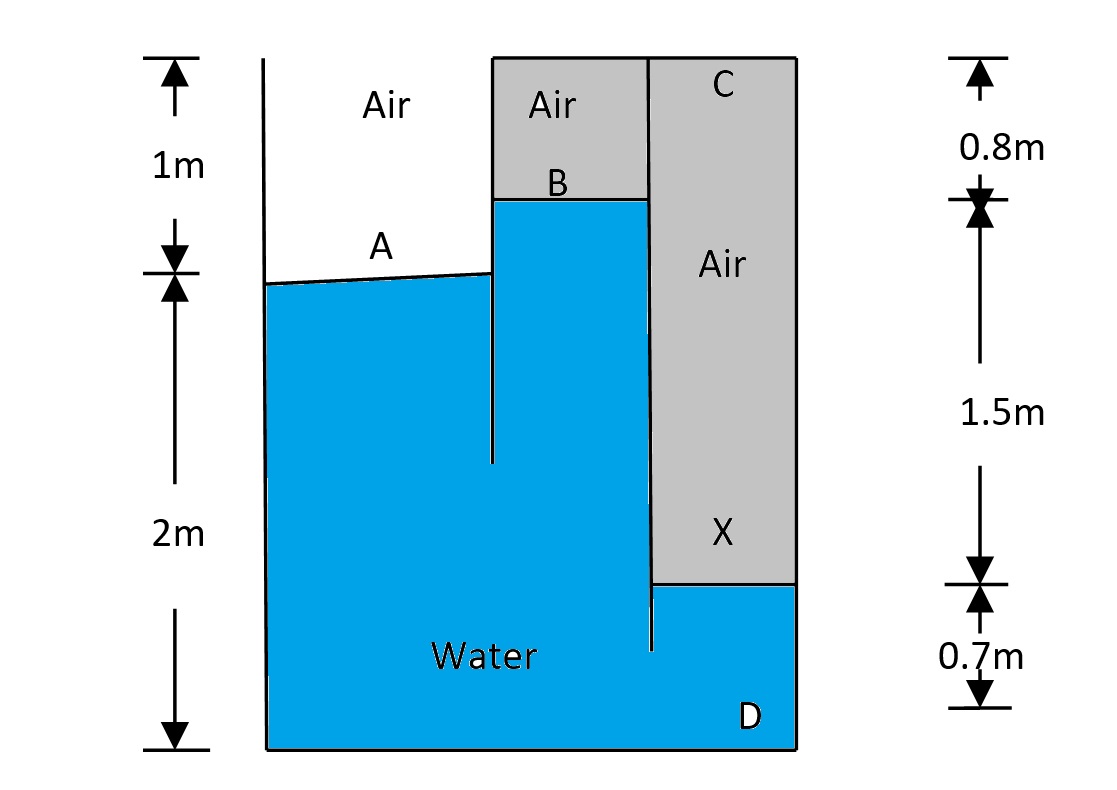
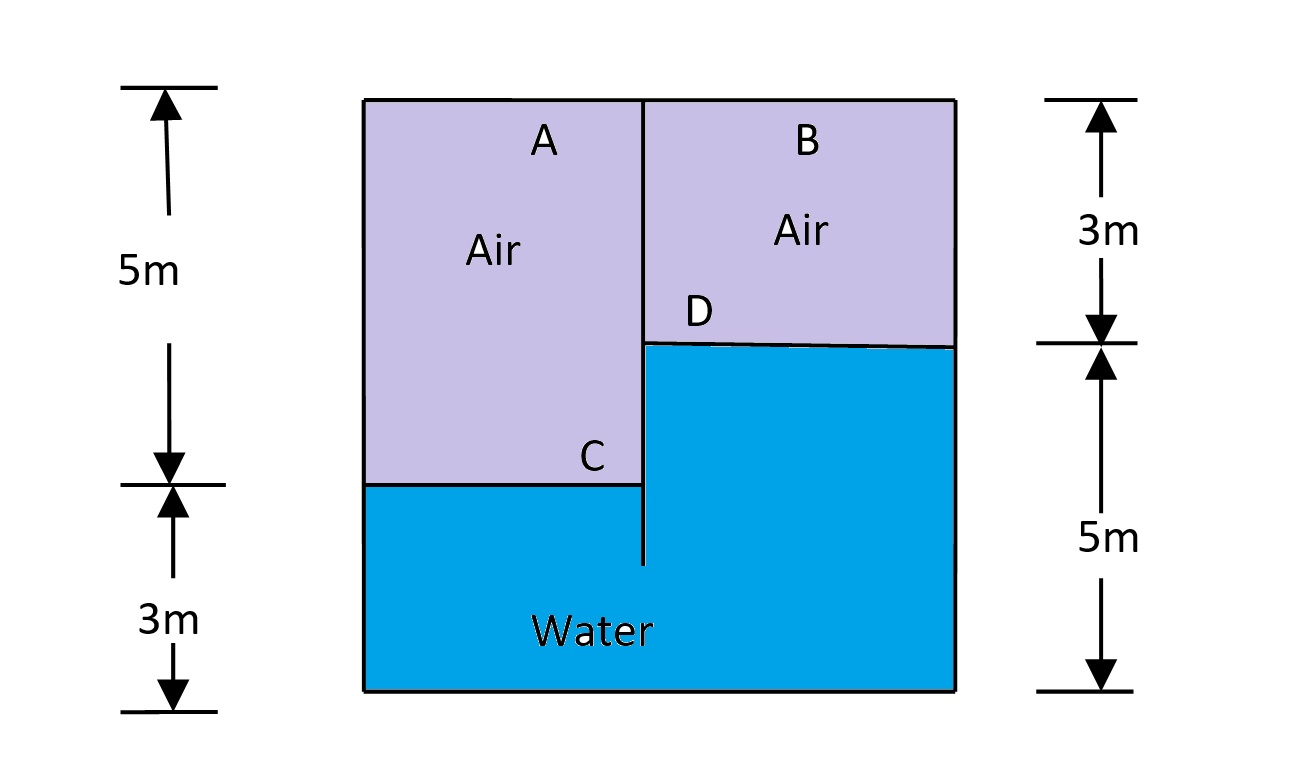
The closed tank in the fig. is at 200 C. If the pressure at point A is 96 Kpa absolute, what is the absolute pressure at point B? What percent error results from neglecting the specific weight of air? (Take sp wt of air = 0.0118 KN/m3)

The closed tank in the fig. is at 200 C. If the pressure at point A is 96 Kpa absolute, what is the absolute pressure at point B? What percent error results from neglecting the specific weight of air? (Take sp wt of air = 0.0118 KN/m3)

Problem Statement A closed tank is at \( 20°C \). If the pressure at point A is \( 96 \,

The closed tank in the fig. is at 200 C. If the pressure at point A is 96 Kpa absolute, what is the absolute pressure at point B? What percent error results from neglecting the specific weight of air? (Take sp wt of air = 0.0118 KN/m3) Read More »

Scroll to Top